


 Argentina
 Brazil
 BVI
BVI Canada
 Chile
Chile Colombia
 Costa Rica
 Curaçao
 Guatemala
 Honduras
 Mexico
 Nicaragua
 Panama
 Peru
Peru Uruguay
 USA
USA Germany
 Luxembourg
 South Africa
 Spain
Spain Switzerland
 The Netherlands
 United Kingdom
 Hong Kong
 India
India New Zealand
 Singapore
 Turkey
 H&CO
H&CO
1 min read
Doing Business in Singapore
 H&CO : Jul 21, 2026, 5:12:55 PM
Few places on earth compress as much commercial firepower into so little land as Singapore. This city-state of just over 700 square kilometers has...
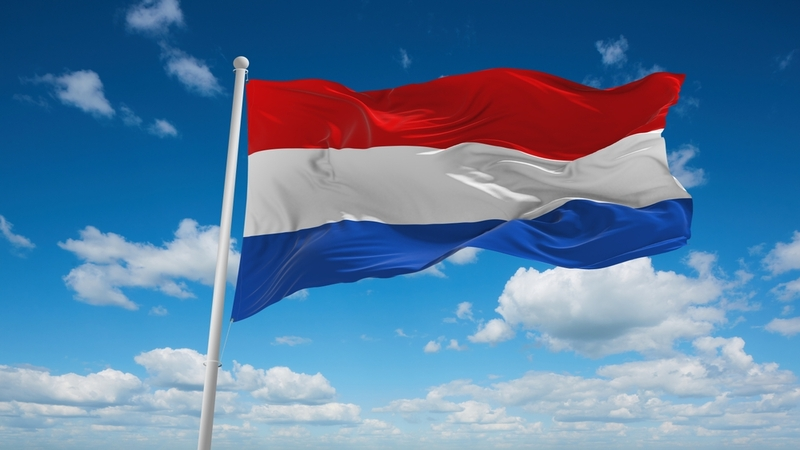
Expanding into the European market requires a strategic hub with robust infrastructure and a pro-business environment. Doing business in the Netherlands has become the premier choice for international companies seeking a direct gateway to the EU. Its world-class logistics—anchored by the Port of Rotterdam—combined with a highly skilled, multilingual workforce and a top-tier digital ecosystem, provides the ideal foundation for sustainable growth and corporate scalability.
However, establishing a foreign entity demands navigating complex international regulatory, accounting, and tax compliance frameworks. To bridge this gap, H&CO serves as a vital strategic partner for global business expansion, delivering comprehensive corporate solutions from international tax planning and compliance to payroll management and entity incorporation. Centralizing these critical operations allows multinational firms to effectively mitigate cross-border risks, optimize efficiency, and ensure a seamless, compliant market entry.

Capitalizing on foreign direct investment in the Netherlands has become a cornerstone strategy for global enterprises seeking high yields and unparalleled access to the European market. Known for its resilient economy, political stability, and top-tier physical and digital infrastructure, the country consistently ranks as a premier destination for international capital. The Dutch business ecosystem provides an exceptionally secure environment where corporate innovation is backed by proactive government grants, transparent legal frameworks, and a highly skilled, English-proficient workforce.
As global markets shift toward digitalization and decarbonization, the Dutch market offers highly lucrative pathways across specialized, research-intensive sectors. Driven by aggressive national sustainability targets and an unmatched commitment to technological advancement, strategic venture capital and corporate expansions are finding high-growth margins in the region. For international organizations looking to establish a resilient European footprint, the current landscape presents distinct investment opportunities in the Netherlands within several pioneering industries.
The Netherlands stands at the absolute center of the global microchip supply chain, making it a prime hub for semiconductor and artificial intelligence hardware investments. Driven by international giants like ASML, the country boasts an intensive R&D ecosystem that fuels next-generation chip machine manufacturing, advanced robotics, and electronics. With the global AI boom accelerating demand for processing power and data center infrastructure, investing in the Dutch tech corridor offers immediate integration into Europe’s most advanced technological value chain.
The Dutch commitment to achieving a circular economy and net-zero emissions has unlocked massive investment opportunities in clean energy infrastructure. High-growth segments include massive offshore wind farm developments, battery energy storage systems (BESS) to combat grid congestion, and the scaling of sustainable aviation fuels (SAF). Additionally, the country is actively building a nationwide green hydrogen network, offering substantial potential for providers of clean technologies, carbon capture systems, and sustainable logistics infrastructure.
As the world’s second-largest agricultural exporter by value, the Netherlands is a global leader in agritech and precision farming innovation. Capital inflows are heavily directed toward automated greenhouse systems, vertical farming technologies, and biotechnology for sustainable seed development. International investors can leverage a dense network of world-class research institutes and corporate R&D hubs focused on maximizing food security, reducing nitrogen emissions, and scaling plant-based alternative proteins.
The Dutch Life Sciences & Health sector is one of the most concentrated and collaborative biopharmaceutical ecosystems in the world. Backed by the presence of the European Medicines Agency (EMA) in Amsterdam, the country attracts significant funding for biotechnology, digital health solutions, and medical devices. Key investment areas focus on AI-driven diagnostics, personalized medicine, and advanced medical equipment manufacturing, supported by a unique model where government, academia, and private corporations co-innovate.
Home to the Amsterdam Internet Exchange (AMS-IX), one of the largest data transport hubs globally, the Netherlands is a cornerstone of European digital trade. This robust connectivity has created a surging demand for enterprise software, cloud infrastructure, and advanced cyber security solutions. With an internet penetration rate near 99%, businesses specializing in data privacy, threat intelligence, and digital workforce automation find an exceptionally mature consumer base and unparalleled commercial scalability.

|
Population: Approximately 18.5 million inhabitants, highly urbanized and concentrated within major economic hubs like the Randstad region, encompassing Amsterdam, Rotterdam, The Hague, and Utrecht, which drive the nation's industry. Official Languages: While the Netherlands recognizes Dutch as official, English is the universal standard for business, governance, and higher education, ensuring seamless communication across all corporate, legal, and international trade sectors. Currency: The Euro (EUR) is the official currency under a unified monetary framework. Managed by the European Central Bank (ECB) and the Dutch Central Bank (DNB), it ranks among the most liquid and heavily traded global reserve currencies. Political System: The country operates as a stable constitutional monarchy under a parliamentary democracy. Supported by an independent judiciary and a highly transparent civil code, its legal framework guarantees robust protections for foreign direct investment (FDI). Economic System: As Europe's most competitive and digitally advanced economy, it serves as a strategic continental gateway. The market-driven GDP is anchored by world-class financial services, advanced technology, a dominant agrifood sector, and strong corporate governance standards. |
Establishing a corporate footprint in the Netherlands provides an unparalleled gateway into the European Union's highly lucrative consumer base. This nation functions as the continent’s ultimate commercial crossroads, integrating premier deep-water ports and cutting-edge digital infrastructure to link international corporations with affluent European markets. Anchored by Euronext Amsterdam and an incredibly robust financial sector, it offers multinational firms a highly transparent, resilient, and liquid framework for capital management.
Long-term corporate scaling is amplified by a pro-business tax structure and a vast web of bilateral treaties engineered to eliminate double taxation on global earnings. Leveraging unique fiscal mechanisms like the Innovation Box and flexible customs warehousing systems, enterprises benefit from optimized tax duties, duty suspension, and streamlined regulatory processes. Integrated deeply within the European Single Market, the jurisdiction represents a premier, legally secure headquarters for scaling pan-European commercial distributions.
The Dutch corporate landscape operates under a highly reliable civil law system governed by the Dutch Civil Code and administered by the Chamber of Commerce (KVK). Business governance is anchored by exceptional transparency standards and compliance with the Dutch Corporate Governance Code. To ensure long-term market compliance, expanding enterprises must successfully navigate robust local employment protections, align with stringent European Union regulatory directives, and adhere to strict data privacy protocols under the GDPR framework.
Understanding the fiscal environment in the Netherlands is a critical step for multinational corporations structuring their European operations. Administered by the Dutch Tax Authorities (Belastingdienst), the country utilizes a worldwide taxation framework for resident entities, while non-resident corporations are liable solely on Dutch-sourced income. The tax system balances a competitive two-tier corporate rate with strategic mechanisms like the Innovation Box, favorable capital gains exemptions, and an extensive global network of double taxation treaties designed to optimize cross-border profit allocations and protect foreign capital.
| Tax Type | 2026 Rate / Threshold | Key Feature & Strategic Insight |
| Corporate Income Tax (CIT) |
19% up to €200,000 25.8% on the excess |
Applies to worldwide profits for resident companies. The two-tier structure offers a competitive entry rate for expanding businesses. |
| Innovation Box | 9% effective tax rate | A premier tax incentive reducing CIT on net profits derived from qualifying self-developed intellectual property (IP) and R&D activities. |
| Value Added Tax (VAT / BTW) |
21% standard rate 9% / 0% reduced rates |
Levied on goods and services. Companies can fully reclaim input VAT paid on business expenses and operational investments. |
| Dividend Withholding Tax | 15% standard statutory rate | Often reduced to 0% under the Dutch Participation Exemption (for ≥5% corporate shareholdings) or via international double tax treaties (such as the US-Netherlands treaty). |
| Conditional Withholding Tax | 25.8% (matches highest CIT tier) | A targeted anti-abuse levy on interest, royalties, and dividends paid specifically to low-tax jurisdictions or in abusive corporate structures. |
To accelerate commercial growth and foster market-leading innovation, the Dutch government offers an aggressive suite of fiscal credits and corporate grants tailored for expanding enterprises. These strategic investment incentives in the Netherlands significantly lower operational costs, optimize R&D budgets, and facilitate high-tech, sustainable capital deployment across the European Single Market.

|
The business context in the Netherlands is defined by an open, highly competitive economy that serves as Europe's premier commercial crossroads. Anchored by world-class infrastructure like the Port of Rotterdam and a transparent legal framework, the nation offers multinational firms unparalleled continental connectivity. This stable marketplace thrives on a unique collaborative ecosystem between private enterprises, academia, and government, ensuring a secure environment for global corporate scaling. High-growth investment opportunities in the Netherlands are heavily concentrated within future-proof industries driving Europe's digital and green transitions. Foreign capital finds exceptional scalability in advanced technology corridors, particularly in semiconductors and AI infrastructure. Furthermore, aggressive national sustainability goals have unlocked massive commercial potential in renewable energy, green hydrogen, and automated agritech systems, making the country the ultimate launchpad for global expansion. |
The Netherlands Business Culture
The business culture in the Netherlands is deeply rooted in egalitarianism, pragmatism, and absolute transparency, making it one of the most efficient corporate environments in the world. Striking a distinct balance between professional rigor and mutual respect, Dutch professionals approach commercial interactions with an open mind and a strict focus on functional efficiency. Success in this highly competitive marketplace relies on understanding how deep-seated cultural values of equity, honesty, and collaboration shape daily operational relationships and strategic corporate decision-making.
The Dutch corporate landscape features exceptionally flat structures where top-down authority is actively discouraged. Decision-making relies heavily on the Polder Model—a consensus-driven framework requiring consultation across all operational levels before execution. Managers act as facilitators, and professional respect is earned through technical competence and data rather than job titles.
Communication is famously direct and transparent, focusing entirely on factual data and clear outcomes. Constructive criticism is viewed as a practical problem-solving tool rather than a personal slight. Punctuality is non-negotiable, and corporate pitches must be realistic, completely free of hyperbole, and backed by verifiable metrics.
1 min read
H&CO : Jul 21, 2026, 5:12:55 PM
Few places on earth compress as much commercial firepower into so little land as Singapore. This city-state of just over 700 square kilometers has...
1 min read
H&CO : Jul 27, 2026, 5:37:09 PM
Turkey stands as an indispensable strategic gateway, physically and economically bridging Europe, Asia, and the Middle East to offer foreign...
1 min read
H&CO : Jun 30, 2026, 5:52:30 PM
As Africa’s most industrialized and diversified economy, South Africa stands out as a premier destination for global businesses looking to tap into...