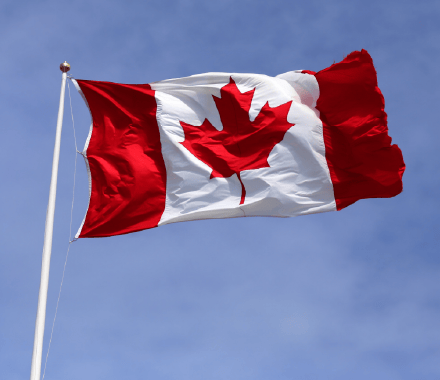


This tax treaty plays a crucial role in avoiding double taxation and fostering cross-border investment. This agreement establishes clear rules on income, dividends, and other taxable activities, offering greater certainty and protection for businesses and individuals operating in both countries.

H&CO
Canada
Your strategic partner for Growth and Innovation in the American market.
Local Expertise in a Global World
Our network of contact offices spans continents, bringing the expertise of H&CO professionals closer to you. Whether you're seeking financial advice, strategic consulting, or tailored solutions, our dedicated teams in various locations are here to serve you with a personalized touch.
Canada
7181 Woodbine Ave., Suite 238
Markham, ON Canada L3R 1A3
Doing Business
Canada offers one of the world’s most stable economies, a skilled workforce, and attractive opportunities for foreign investors. In this guide, we explore the key aspects of doing business in Canada, from its leading industries to the regulatory framework that supports international expansion.
How to
open a Business
Starting a business in Canada requires careful planning, from choosing the right legal structure to registering your company and opening a corporate bank account. This guide walks you through the essential steps to successfully establish your business in one of the world’s most competitive and business-friendly markets.
Main industries for Business in Canada
Real Estate, Rental & Leasing
As Canada’s single largest GDP contributor, this stable sector attracts significant foreign investment across major urban hubs, offering prime opportunities in residential, commercial, and logistics real estate.
Manufacturing
A cornerstone of the economy centered in Ontario and Quebec. Driven by automotive and aerospace hubs, it offers immense export potential to the U.S. by leveraging advanced automation and clean technologies.
Mining, Quarrying, and Oil & Gas Extraction
A resource-rich powerhouse leading global production in oil, gas, and minerals. Centered in Western Canada, it offers massive investment potential focused on sustainability and strict regulatory compliance.
Finance and Insurance
Globally renowned for its resilience and transparency, this sector offers a secure platform for international capital. Toronto leads as a top financial hub with robust markets and rapid fintech innovation.
FAQs about Canada
-
Which business structures are available in Canada and what are their implications?
Canada offers multiple business structures: sole proprietorships, partnerships, corporations, and co-operatives. Each has unique implications for liability, governance, taxation, and compliance. Understanding the regulatory and operational differences is essential to choosing the right form.
-
What taxes, duties, and levies should foreign businesses expect when entering Canada?
Foreign businesses must navigate several tax and duty regimes: GST, potentially combined with provincial sales taxes or HST; corporate income tax (federal and provincial); land transfer taxes; and withholding taxes on certain payments to non-residents. Customs duties may also apply to imported goods unless reduced under trade agreements.
-
How does the Investment Canada Act (ICA) affect foreign investment?
Under the Investment Canada Act, significant foreign investments, especially those acquiring control of Canadian businesses, must undergo governmental review to assess whether they provide “net benefit to Canada.” Certain investments may trigger notification or formal review, especially when national security or regulated sectors are involved.
-
Are there industry-specific restrictions on foreign ownership?
Yes. Several sectors impose limits on foreign control:
Banks: foreign ownership capped (e.g., 10% for Schedule I banks)
Telecommunications: non-Canadian control limited (e.g., 20% voting shares)
only Canadians can hold broadcasting licenses. These restrictions ensure key industries remain under Canadian control.
-
What regulatory and competition laws must investors consider?
Canada enforces competition law via the Competition Act. Mergers or acquisitions may require advance notification if thresholds are met. Conduct such as price maintenance, exclusive dealing, or abuse of dominance can be reviewed. Violations—like cartel behavior—can result in severe penalties .
Why H&CO?
We specialize in guiding global investors, families, and multinational businesses through the complexities of cross-border investments and business expansion. With offices in over 30 countries, we are a trusted partner for those seeking to relocate, invest, or expand their business abroad providing tax, advisory, and integrated global solutions.
- 1,000+ multilingual professionals, providing local expertise with a global perspective.
- Client-focused leadership with deep industry experience in global markets.
- Forbes America’s Top 200 CPAs, 2025
- Forbes Best in State Top CPAs, 2025
- USA Today America’s Most Recommended Tax and Accounting Firms, 2025
- IPA Top 100 Accounting Firms, 2025 – Ranked #66
- IPA Fastest Growing Firms, 2025
- SFBJ Largest Accounting Firms by Billings, 2025
- SFBJ Largest Accounting Firms by CPAs, 2025
Contact us today!