


 Argentina
 Brazil
 BVI
BVI Canada
 Chile
Chile Colombia
 Costa Rica
 Curaçao
 Guatemala
 Honduras
 Mexico
 Nicaragua
 Panama
 Peru
Peru Uruguay
 USA
USA Germany
 Luxembourg
 South Africa
 Spain
Spain Switzerland
 The Netherlands
 United Kingdom
 Hong Kong
 India
India New Zealand
 Singapore
 Turkey
 H&CO
H&CO
1 min read
Doing Business in Singapore
 H&CO : Jul 21, 2026, 5:12:55 PM
Few places on earth compress as much commercial firepower into so little land as Singapore. This city-state of just over 700 square kilometers has...
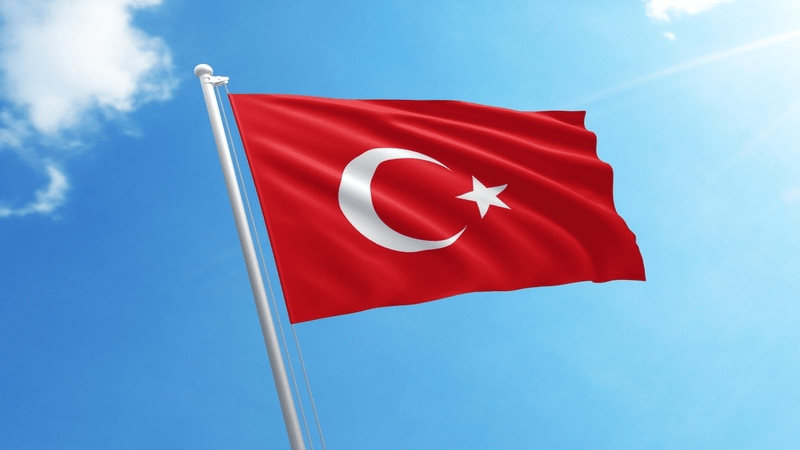
Turkey stands as an indispensable strategic gateway, physically and economically bridging Europe, Asia, and the Middle East to offer foreign investors unparalleled access to a market of over 85 million consumers. This unique transcontinental position is backed by robust economic fundamentals: a standard corporate tax rate of 25%, an extensive Customs Union agreement with the European Union, dynamic Technology Development Zones offering substantial tax incentives, and a streamlined business environment where foreign investors enjoy equal treatment under the Foreign Direct Investment (FDI) Law. For global enterprises looking to establish a resilient manufacturing, logistics, or regional management hub, doing business in Turkey provides a powerful combination of a highly skilled labor force, modern infrastructure, and direct commercial reach into high-growth markets across Eurasia and the MENA region.
Yet, navigating Turkey’s evolving regulatory landscape demands careful management of complex local tax laws, frequent statutory updates, foreign exchange considerations, and strict labor regulations that can quickly overwhelm expanding multinational teams. H&CO serves as a trusted strategic partner throughout this journey, guiding international businesses through cross-border tax structuring, entity incorporation, corporate compliance, and outsourced accounting and payroll services. By leveraging deep local expertise and a global cross-border perspective, H&CO helps foreign companies mitigate operational risk, maintain seamless compliance, and scale their operations in Turkey with clarity and confidence.

Strategic Bridge Between Europe and Asia: Offers a transcontinental commercial hub with a market of over 85 million consumers, seamless trade access to Europe via the EU Customs Union, and direct operational reach across Eurasia and the MENA region.
Competitive & Structured Tax Regime: Applies a standard corporate tax rate of 25%, a flexible VAT framework (with 1%, 10%, and 20% tiers recoverable on business inputs), and equal tax treatment under the Foreign Direct Investment (FDI) Law.
Fast Incorporation & Foreign Investor Guarantees: A Limited Liability Company (Anonim or Limited Şirket) can be set up in a few days via the central Trade Registry (MERSİS), offering 100% foreign ownership with no local partner requirements.
Robust R&D & Investment Incentives: Provides tax exemptions, social security support, and duty relief through Technoparks (Technology Development Zones), organized industrial zones (OSBs), and regional investment incentive packages.
Young, Highly Skilled Workforce: Delivers access to a dynamic, well-educated talent pool of over 33 million professionals, with strong language capabilities and competitive labor costs relative to Western Europe.
Diversified & Industrialized Economy: Drives global competitiveness across automotive, aerospace, defense, machinery, textiles, fintech, and a booming tech startup ecosystem centered in Istanbul and Ankara.
Investment Opportunities in Turkey
Positioned directly at the crossroads of two continents, Turkey offers multinational enterprises a unmatched springboard into a combined regional market exceeding 850 million consumers across Europe, the Middle East, and Central Asia. Rather than relying solely on its geographical advantage, the country backs this access with tangible commercial incentives: a competitive 25% corporate tax rate, full access to the European market through the EU Customs Union, and dedicated Technology Development Zones that provide tax-exempt operational environments. Supported by the Foreign Direct Investment (FDI) Law—which guarantees equal treatment for international entities—Turkey presents an ideal setting for corporations aiming to establish scalable manufacturing hubs, regional headquarters, or agile supply chain networks.
However, expanding into the Turkish market requires navigating a distinct set of operational challenges, ranging from dynamic tax regulations and shifting foreign exchange policies to intricate labor compliance rules. This is where H&CO transforms complexity into growth. As an international consulting partner, H&CO works side-by-side with expanding organizations to handle everything from initial entity setup and cross-border tax planning to ongoing accounting, payroll, and regulatory reporting. By combining local operational insight with global corporate strategy, H&CO enables businesses to mitigate cross-border exposure and establish a secure, long-term footprint in Turkey.
Automotive, Mobility and Advanced Manufacturing
Turkey is one of Europe’s largest automotive and commercial vehicle production hubs, backed by decades of OEM assembly, precision engineering, and a dense supplier ecosystem. Investment is flowing heavily into electric vehicle (EV) manufacturing, next-generation battery production, and autonomous mobility technology. Supported by government investment incentives and proximity to European markets via the EU Customs Union, international companies gain immediate access to high-precision manufacturing at competitive operational costs.
Renewable Energy, Hydro and CleanTech
Turkey ranks among the top European markets for installed solar, wind, and geothermal capacity, leveraging its vast natural geography to accelerate energy transition goals. Capital is heavily concentrated in onshore wind farms, utility-scale solar generation, green hydrogen development, and grid-scale energy storage systems. The government’s ambitious long-term renewable targets and feed-in tariff frameworks create long-term predictability for infrastructure funds, equipment suppliers, and clean energy developers.
Tech Startups, Gaming and SaaS
Turkey has emerged as one of Eurasia's most productive startup incubators, boasting multiple unicorns across mobile gaming, e-commerce, fintech, and logistics platforms. Investors are targeting enterprise SaaS, AI-driven automation, and digital payment infrastructure designed to scale across regional markets. A massive pool of young software engineering talent, combined with specialized tax exemptions within Technology Development Zones (Teknoparks), makes the sector exceptionally attractive for high-growth tech ventures.
Aerospace, Defense and Machinery
Anchored by global breakthroughs in uncrewed aerial vehicles (UAVs), defense electronics, and precision machinery, Turkey’s defense and aerospace sector has turned into a primary export driver. The industry relies on specialized industrial clusters around Ankara and Istanbul, attracting investment in advanced composite materials, avionics, and high-spec manufacturing. Both domestic and international participants benefit from state-backed R&D grants and a highly skilled technical workforce.
Life Sciences, Pharmaceuticals and MedTech
Turkey’s life sciences sector pairs a large domestic healthcare market with strong university pipelines and a expanding base of pharmaceutical and medical device manufacturing. Investment is concentrated in biosimilars, medical diagnostics, hospital equipment, and digital health platforms tailored for international export. Supported by government-backed R&D incentives and localized manufacturing policies, the sector offers foreign investors a structured pathway from production to regional distribution.

|
Population: Exceeds 85 million residents, strategically distributed across major industrial hubs like Istanbul, Ankara, and Izmir, with Istanbul alone housing nearly 20% of the population and serving as the financial and corporate epicenter of the region. Official Language: Turkish is the sole official language; English is widely utilized across international commerce, corporate management, higher education, and multinational business operations. Currency: The Turkish Lira (TRY) is a floating currency managed by the Central Bank of the Republic of Türkiye (CBRT), which oversees monetary policy, inflation targets, and banking sector regulation. Political System: A presidential republic with a unicameral parliament (Grand National Assembly), an independent court system, and a modernized administrative structure designed to streamline foreign direct investment through dedicated government agencies. Economic System: A dynamic, upper-middle-income industrial economy anchored by automotive manufacturing, defense technology, agriculture, and high-growth services, supported by strong integration into global supply chains and a comprehensive Customs Union with the European Union. |
Establishing a corporate footprint in Turkey secures an invaluable foothold in one of the most dynamic markets at the nexus of Europe and Asia, backed by zero-tariff trade access into the European Union under the long-standing EU-Turkey Customs Union and preferential commercial agreements across the broader MENA and Eurasian regions. Turkey’s modern civil law framework, modeled after contemporary European legal systems, provides foreign investors with a clear and predictable structure for cross-border contracts, corporate governance, and commercial dispute resolution.
Long-term expansion is supported by a forward-looking financial and fiscal system designed to encourage international investment: a competitive 25% corporate tax rate, significant statutory tax cuts for R&D ventures and technology park operations, and an extensive network of Double Taxation Avoidance Agreements (DTAs) spanning over 80 countries—including the United States, the United Kingdom, and key European and Asian economies. Supported by a robust banking sector overseen by the Banking Regulation and Supervision Agency (BRSA) and a sophisticated capital market centered around Borsa Istanbul, Turkey offers global firms a resilient, well-regulated operational base for multi-regional growth.
Turkey operates under a modern civil law system based on European legal traditions, with business formation and ongoing corporate compliance centralized through the Trade Registry System (MERSİS) under the supervision of the Ministry of Trade. Corporate governance standards are governed by the Turkish Commercial Code (TCC), which enforces strict principles of financial transparency, board accountability, and public disclosure for all registered entities. Multinational companies expanding into the market must also comply with the Foreign Direct Investment (FDI) Law’s equal-treatment guarantees, the Labor Law No. 4857 regarding employee protections, and the Law on the Protection of Personal Data (KVKK)—a comprehensive framework closely aligned with the EU’s General Data Protection Regulation (GDPR).
Navigating Turkey’s tax system requires an understanding of a modern, dynamic framework designed to encourage capital investment while ensuring robust revenue collection. Administered by the Revenue Administration (Gelir İdaresi Başkanlığı – GİB), the tax system levies corporate tax on resident entities based on their worldwide income, whereas non-resident entities are taxed solely on their Turkish-sourced revenue. Rather than relying on high general capital gains taxes, Turkey utilizes a competitive baseline corporate tax rate, attractive tax credits within specialized innovation zones, and an extensive global treaty network to facilitate cross-border expansion.
| Tax Type | 2026 Rate / Threshold | Key Feature & Strategic Insight |
| Corporate Income Tax (CIT) | 25% standard rate (20% for financial institutions; discounts for exporters) | Applies to net corporate profits of resident entities. A 1 percentage point CIT discount is granted to manufacturing and exporting companies to boost international competitiveness. |
| Technology Development Zones (Teknoparks) Incentive | Up to 100% tax exemption | Profits derived from software development, R&D, and tech activities within designated Teknoparks are exempt from corporate tax through 2028. |
| Value Added Tax (VAT / KDV) | 20% standard rate (1% and 10% reduced rates) | Levied on most commercial transactions and imported goods. Registered companies can reclaim input VAT incurred on business expenses and operational purchases. |
| Withholding Tax (WHT) on Dividends | 10% standard rate (reduced under DTAs) | Applied to dividend distributions paid to non-resident shareholders, with lower withholding rates accessible via Turkey's network of over 80 Double Taxation Avoidance Agreements. |
| Capital Gains & Provisional Tax Treatment | 75% or 50% exemption for certain corporate assets; quarterly provisional tax | Corporate capital gains from real estate (50% exemption) or shares in local subsidiaries held for at least two years (75% exemption) are partially exempt if retained in capital. Tax is paid in quarterly provisional installments. |
To drive continuous economic modernization and attract capital-intensive operations, the Turkish government offers a comprehensive and flexible incentive regime administered by the Ministry of Industry and Technology. Rather than relying solely on one-off grants, Turkey’s incentive framework combines significant tax exemptions, social security support, and capital subsidies tailored to lower setup costs, encourage high-tech exports, and stimulate investment across key industrial sectors.

|
The business context in Turkey is defined by a dynamic, large-scale industrial economy that rewards strategic positioning, operational adaptability, and cross-border agility. Anchored by a modern civil law framework, robust commercial infrastructure, and an open foreign direct investment policy, the country provides multinational corporations with a high-yield operational gateway linking Europe, Asia, and the Middle East. This transcontinental ecosystem thrives on close synergy between state investment agencies, specialized industrial zones, and a highly competitive private sector, creating an ideal environment for establishing resilient manufacturing, logistics, and regional headquarters. High-growth investment opportunities in Turkey cluster around sectors where the country holds a structural manufacturing advantage, an extensive talent pool, and immediate market access. Foreign capital finds powerful momentum in automotive and EV assembly, renewable energy generation, aerospace and defense technology, enterprise software, and a rapidly expanding life sciences industry. A national mandate for supply-chain nearshoring, industrial digitalization, and high-value exports positions Turkey as a versatile, scalable launchpad for Eurasian and global expansion. |
Turkey's Business Culture
Business culture in Turkey is defined by a warm, relationship-driven atmosphere deeply rooted in Mediterranean hospitality, respect, and mutual trust. Unlike more transactional markets, commercial success in Turkey depends heavily on personal rapport; Turkish executives prefer to conduct meaningful business with partners they know, respect, and trust. While professional interactions maintain a respectful degree of formality, genuine warmth, personal interest, and face-to-face engagement are essential components of long-term commercial relationships.
Turkish corporate structures are traditionally hierarchical, with clear lines of authority and final decision-making power concentrated among senior executives or company founders. Deference to leadership, age, and experience is a core workplace norm, and formal titles are widely used in professional settings. While mid-level managers contribute heavily to project execution, international teams should ensure they engage directly with top decision-makers when closing agreements or finalizing strategic partnerships.
Communication in Turkey balances professional politeness with expressive, persuasive dialogue, where building personal trust takes precedence over immediate contract signing. Initial meetings often focus on establishing personal background, shared values, and mutual respect before diving into hard negotiations. Punctuality and professional presentation are highly valued, while patience, active listening, and a willingness to engage in warm social conversation are key to building lasting business rapport.
Ready to establish your business in Turkey?
H&CO’s international tax, accounting, and entity management specialists guide multinational companies through entity incorporation, cross-border tax structuring, payroll administration, and local regulatory compliance to guarantee a seamless, risk-mitigated entry into the Turkish market.
1 min read
H&CO : Jul 21, 2026, 5:12:55 PM
Few places on earth compress as much commercial firepower into so little land as Singapore. This city-state of just over 700 square kilometers has...

1 min read
H&CO : Jun 22, 2026, 6:15:25 PM
Panama remains the premier hub for international business and foreign direct investment, universally recognized as the strategic "Hub of the...

H&CO : Jun 10, 2026, 4:25:16 PM
Are you looking to expand your business operations into Central America? As a highly competitive and emerging market in the region, Nicaragua offers...