


 Argentina
 Brazil
 BVI
BVI Canada
 Chile
Chile Colombia
 Costa Rica
 Curaçao
 Guatemala
 Honduras
 Mexico
 Nicaragua
 Panama
 Peru
Peru Uruguay
 USA
USA Germany
 Luxembourg
 South Africa
 Spain
Spain Switzerland
 The Netherlands
 United Kingdom
 Hong Kong
 India
India New Zealand
 Singapore
 Turkey
 H&CO
H&CO
1 min read
Doing Business in Singapore
 H&CO : Jul 21, 2026, 5:12:55 PM
Few places on earth compress as much commercial firepower into so little land as Singapore. This city-state of just over 700 square kilometers has...
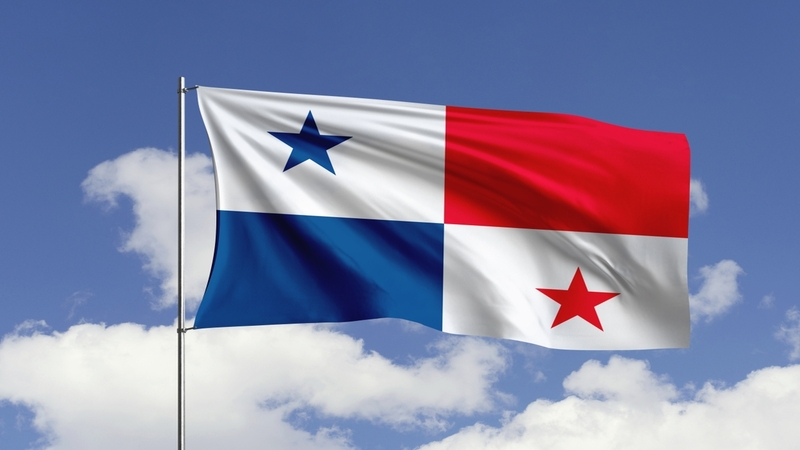
Panama remains the premier hub for international business and foreign direct investment, universally recognized as the strategic "Hub of the Americas." Powered by the Panama Canal and a world-class maritime logistics infrastructure, the country serves as the primary commercial gateway connecting global trade routes between the Atlantic and Pacific oceans. For global corporations, doing business in Panama offers unmatched financial stability underpinned by a fully dollarized economy that completely eliminates currency exchange risks, a robust international banking center, and superior aerial connectivity through Tocumen International Airport.
To accelerate corporate expansion, Panama features highly competitive legal frameworks and corporate tax incentives designed for global enterprises. Multinational companies can leverage world-class special economic zones—such as the Colon Free Zone and Panamá Pacífico—which offer optimized customs and logistics operations. Furthermore, specialized regimes like the SEM license for Multinational Headquarters and the EMMA license for manufacturing services provide substantial tax exemptions, streamlined immigration processes, and labor incentives, making the jurisdiction the leading regional base for tax-efficient business operations.
At H&CO, we streamline the complexities of company incorporation and regulatory compliance within Panama's corporate landscape. Whether your strategy involves leveraging SEM headquarters benefits, establishing a global logistics network, or safely navigating Panamian tax advisory structures, we provide the localized, hands-on expertise necessary to secure your investment. Our team ensures seamless cross-border compliance from day one, allowing global enterprises to mitigate financial risks and focus entirely on maximizing growth within Latin America’s leading economic hub.

Panama stands as Latin America’s ultimate logistics powerhouse and a magnet for long-term foreign direct investment, driven by consistent macroeconomic growth and a fully dollarized economy. Far more than just a transit point, the country offers a secure, pro-business environment backed by specialized legal frameworks designed to yield high returns.
For global corporations looking to streamline their international tax strategies, Panama’s strict territorial tax system ensures that 100% of foreign-sourced income is exempt from local corporate taxes. By utilizing this unique financial and legal ecosystem, enterprises can build highly compliant, tax-efficient hubs primed for scaling across the Americas.
Panama is the undisputed logistical heart of the Americas, anchored by the Panama Canal and state-of-the-art multimodal ports on both the Atlantic and Pacific oceans. Through world-class special economic zones like the Colon Free Zone and Panamá Pacífico, investors benefit from tax-free imports, duty-free re-exports, and expedited customs. Furthermore, the EMMA license (Multinational Companies for Manufacturing Services) provides massive fiscal incentives, streamlined labor regulations, and customs exemptions for corporations looking to establish regional assembly, light manufacturing, and smart logistics operations.
Panama has positioned itself as the preferred corporate sanctuary for Fortune 500 companies through its renowned SEM Law (Sede de Empresas Multinacionales). The SEM license grants multinational headquarters extraordinary benefits, including a reduced corporate tax rate of just 5% on onshore services, complete exemptions on foreign-sourced income, and a streamlined, tax-free immigration pipeline for foreign executives. This framework turns Panama into a highly competitive hub for regional back-office operations, digital tech hubs, and centralized corporate management.
The Panamanian real estate and infrastructure sectors continue to attract massive international capital, heavily driven by government-backed residency programs. Through the Qualified Investor Program (Panama Golden Visa), foreign real estate investors can secure immediate permanent residency by meeting accessible investment thresholds in premium commercial or residential properties. Coupled with a booming tourism infrastructure and specific tax holidays on property improvements, Panama offers high-asset individuals and real estate funds stable capital appreciation and reliable rental yields in a USD-backed market.

|
Population: Approximately 4.5 million inhabitants, featuring a highly urbanized population heavily concentrated within the Panama City metropolitan area, which serves as the primary economic and corporate engine of the nation. Official Languages: Spanish is the official language. However, English is widely spoken and universally utilized as the primary language across all international business, banking, maritime logistics, and legal sectors. Currency: The US Dollar (USD) functions as the legal tender and circulating currency. It is parity-pegged at a 1:1 rate with the local currency, the Panamanian Balboa (PAB), completely eliminating currency devaluation and exchange-rate risks for foreign investors. Political System: Panama operates as a stable, constitutional presidential republic under a multi-party representative democracy. Its legal framework ensures strong institutional stability, a clear separation of powers, and consistent, peaceful democratic transitions, providing a secure environment for foreign direct investment (FDI). |
Investing in Panama offers global corporations unparalleled strategic advantages, firmly establishing the nation as the premier business destination in Latin America. Universally recognized as the "Hub of the Americas," Panama leverages the economic power of the Panama Canal and a world-class multimodal logistics infrastructure to seamlessly connect Atlantic and Pacific trade routes. Beyond its geographical privilege, the country’s fully dollarized economy eliminates currency exchange and devaluation risks, providing international investors with a highly secure, stable, and predictable financial environment anchored by a robust international banking center.
In addition to economic stability, doing business in Panama yields exceptional fiscal efficiencies through its strict territorial tax system, which completely exempts all foreign-sourced income from local corporate taxes. The jurisdiction actively incentivizes foreign direct investment (FDI) through world-class special economic zones—such as the Colon Free Zone and Panamá Pacífico—and specialized legal frameworks like the SEM license for Multinational Headquarters and the EMMA license for manufacturing and logistics. These forward-thinking regulations provide substantial tax exemptions, streamlined corporate immigration pathways, and operational flexibility, making Panama the ultimate compliant launchpad for tax-efficient regional expansion.
Operating a business in Panama means entering a highly secure, pro-business legal ecosystem backed by robust statutory guarantees. Unlike common law jurisdictions, Panama operates under a codified civil law system that offers clear, predictable rules for commercial transactions. A cornerstone of the country's appeal to foreign direct investment (FDI) is Law 54 of 1998 (Legal Stability Law), which explicitly guarantees that foreign investors enjoy the exact same rights, protections, and privileges as domestic citizens. This landmark legislation provides a 10-year legal lock, ensuring that corporate tax rates, customs regimes, and labor regulations remain unchanged for registered investment projects from the day they are established.
The foundational pillar of Panama’s fiscal policy is its strict territorial tax system. Under this framework, the government only levies taxes on net income generated directly from commercial activities conducted within the physical territory of Panama. Any revenue generated from offshore transactions, cross-border trade, or international services managed from Panama is entirely exempt from local taxation.
The table below outlines the core components of the Panamanian tax architecture for corporate entities:
| Tax Aspect | Description / Rate |
| Standard Corporate Income Tax (ISR) | A flat 25% rate is applied exclusively to net taxable income derived from local, domestic operations. |
| Territorial Tax Exemption | 0% tax rate on all foreign-sourced income. International operations and cross-border logistics face no corporate tax burden. |
| SEM & EMMA Preferential Regimes | Qualifying operations under a Multinational Headquarters (SEM) or Manufacturing Services (EMMA) license enjoy a significantly reduced corporate income tax rate of just 5%. |
| Dividend Withholding Tax | Levied at 10% for distributions derived from domestic-source income, and reduced to 5% for dividends paid out of foreign-source or tax-exempt income. |
| ITBMS (Value Added Tax) | The standard rate is 7% on the transfer of goods and rendering of services. Specific rates apply to luxury items and hospitality: 10% for accommodations and alcohol, and 15% for tobacco products. |
| Tax Compliance Deadlines | ITBMS declarations and payments must be processed monthly. Annual Corporate Income Tax (ISR) returns must be submitted within three months following the end of the fiscal year (typically by March 15). |
To remain the premier business destination in Latin America, the Ministry of Commerce and Industries (MICI) and PROPANAMA actively promote aggressive incentive frameworks to maximize corporate growth and wealth preservation:

|
Panama is rapidly expanding into high-growth market niches, specifically hyperscale data centers, financial technology (Fintech), and green hydrogen production. While the economy has traditionally relied on standard maritime transit, the country has aggressively transformed into a digital and ecological powerhouse. Panama serves as the landing point for seven transoceanic submarine fiber-optic cables, making it the lowest-latency telecommunications and cloud computing hub in Latin America. Furthermore, through its National Green Hydrogen Strategy, Panama is leveraging its unique position as one of the world's few carbon-negative nations to pioneer clean-energy maritime bunkering and renewable energy infrastructure. To successfully enter these sophisticated sectors, international corporations must implement rigorous corporate governance that complies with Panama’s modern transparency frameworks. The jurisdiction has significantly upgraded its regulatory environment to align with OECD and FATF standards, heavily enforcing the Unique Registry of Beneficial Owners (RUB) to combat harmful tax practices and ensure absolute corporate compliance. Data and strategic roadmaps from PROPANAMA indicate that the synergy between foreign tech capital and Panama’s advanced digital and environmental infrastructure is the definitive catalyst powering the country's next-generation knowledge economy. |
Panama Business Culture
Panama’s business culture is a sophisticated hybrid, blending North American corporate pragmatism—honed over a century of international canal and banking operations—with traditional Latin American diplomacy. Building strong interpersonal relationships (personalismo) is critical; initial meetings are frequently dedicated to establishing mutual trust and rapport before diving into technical contract details.
Corporate structures in Panama are predominantly top-down and hierarchical. Major decisions are almost exclusively made by senior executives or the heads of family-led conglomerates. Showing explicit deference to executive leadership and utilizing professional titles—such as Licenciado (Attorney/Graduate), Ingeniero (Engineer), or Doctor—is standard corporate protocol. While mid-level managers drive the operational analysis, final negotiations require the presence and approval of top-tier partners.
While Spanish is the national language, English is the undisputed language of international commerce, logistics, and banking in Panama City. Business communication is highly professional, polite, and cooperative. Panamanians appreciate an indirect approach to negotiation that preserves corporate harmony, rather than aggressive, high-pressure sales tactics. In the international corporate sphere, punctuality is strictly expected, though navigating Panama City's notorious traffic is a universally understood variable.
Panama City functions as the economic engine of the country, boasting a skyline that reflects its status as a global financial center. For international entities setting up operations or hosting clients, three specific districts stand out:
Costa del Este is a premium, master-planned real estate development that has become the preferred enclave for Fortune 500 multinational headquarters operating under the SEM license. This hyper-modern district features cutting-edge business parks, high-security corporate towers, and upscale residential complexes. It is highly self-sufficient and walkable, minimizing traffic challenges for executives commuting between their offices and luxury residences.
Anchored around Calle 50 and the iconic banking towers of Obarrio, this area serves as the traditional banking heart of Latin America. Adjacent to it lies Punta Pacífica, an affluent waterfront neighborhood hosting elite corporate offices within structures like the Torre de las Américas. This combined zone offers immediate access to international banks, legal offices, and top-tier corporate services.
As a designated UNESCO World Heritage site, Casco Viejo offers a stark, historic contrast to the city's modern skyscrapers. It has evolved into a highly prestigious creative and corporate hub where restored colonial buildings house boutique law firms, specialized consultancies, and diplomatic embassies. It provides an exceptional, culturally rich environment for high-level networking, executive dinners, and entertaining international clients.
For confidential corporate meetings and high-stakes negotiations, Panama City features a world-class culinary and hospitality ecosystem:
1 min read
H&CO : Jul 21, 2026, 5:12:55 PM
Few places on earth compress as much commercial firepower into so little land as Singapore. This city-state of just over 700 square kilometers has...

H&CO : Jun 9, 2026, 12:15:36 PM
As Central America’s economic powerhouse, Guatemala has established itself as a premier nearshore hub for global manufacturing and digital services....

1 min read
H&CO : Jun 23, 2026, 1:10:51 PM
As Europe’s economic powerhouse and one of the world’s leading exporters, Germany offers unparalleled opportunities for businesses seeking stability...