


 Argentina
 Brazil
 BVI
BVI Canada
 Chile
Chile Colombia
 Costa Rica
 Curaçao
 Guatemala
 Honduras
 Mexico
 Nicaragua
 Panama
 Peru
Peru Uruguay
 USA
USA Germany
 Luxembourg
 South Africa
 Spain
Spain Switzerland
 The Netherlands
 United Kingdom
 Hong Kong
 India
India New Zealand
 Singapore
 Turkey
 H&CO
H&CO
Doing Business in Canada
 H&CO : Jun 3, 2026, 3:50:16 PM
Canada consistently ranks as one of the most stable, secure, and competitive economies for foreign investment globally. As a prominent member of both...
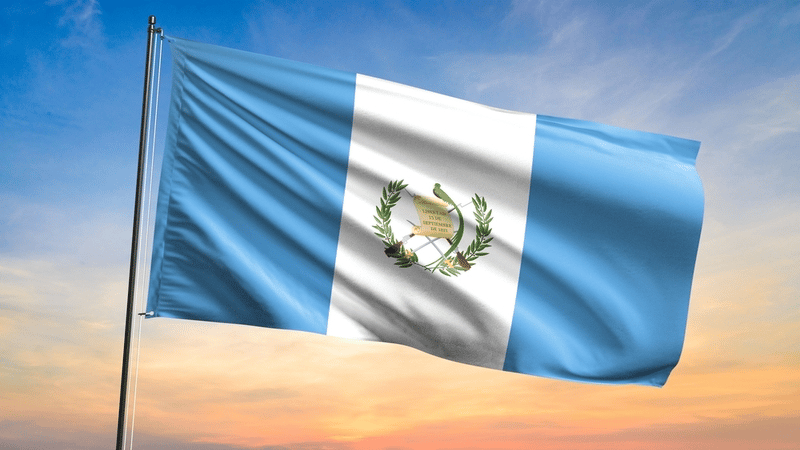
As Central America’s economic powerhouse, Guatemala has established itself as a premier nearshore hub for global manufacturing and digital services. The country’s investor-friendly environment features total currency liberalization and ironclad protections for private property, attracting hundreds of multinational brands. To thrive here, however, foreign enterprises must carefully align their operations with evolving compliance standards, particularly regarding beneficial ownership transparency, corporate governance, and local tax structures

Representing roughly 35% of Central America’s total GDP, Guatemala offers a stable and wide-open economic ecosystem tailored for global enterprises and multinational corporations. Backed by fully liberalized investment laws and seamless capital repatriation policies, the jurisdiction has built an attractive climate that recently yielded USD 1.55 billion in annual Foreign Direct Investment (FDI) inflows, lifting its total inward FDI stock to USD 24 billion. Anchored by core pillars like agriculture, high-volume textiles, and renewable energy, the economy maintains a resilient expansion trajectory, keeping a steady 3.7% growth base before pushing higher into the mid-2020s.
Below are the key strategic sectors that solidify the country's position as a premier destination for production, asset growth, and international corporate structuring:
Total Population: Approximately 18.5 million inhabitants (recent 2026 estimate).
Currency: Guatemalan Quetzal (GTQ). Note: Under the Law of Free Negotiation of Currencies, the United States Dollar (USD) is completely authorized for use in commercial contracts, effectively eliminating foreign exchange restrictions and transfer risks for global enterprises.
Official Language: Spanish. While multiple indigenous languages are spoken nationwide, Spanish is the absolute language of business, legislation, and public administration.
Political System: Presidential Representative Democratic Republic. It operates as a stable democracy with three independent branches of power: Executive, Legislative, and Judicial.
Economic System: Central America's largest free-market economy, strongly sustained by agricultural exports, manufacturing, an expanding services sector, and solid macroeconomic indicators
Guatemala operates on a strict principle of territorial taxation. Under the Guatemalan Tax Code, within Guatemala’s broader tax system, corporate income tax (CIT) is levied exclusively on revenue generated from economic activities conducted within the country's borders; foreign-source income is completely exempt from local corporate taxation. Corporations registered with the Superintendence of Tax Administration (SAT) must choose between two distinct income tax regimes, and the taxpayer chooses the one that applies to its activities:
Guatemala has no General Anti-Avoidance Rules in its tax system. Resident individuals are subject to personal income tax at rates ranging from 5% to 7%.
To align with international transparency standards and minimize tax leakage, the territory enforces strict annual compliance updates through the Unified Tax Registry (RTU), governed by Decree 6-91 under guatemalan law, with periodic updates tied to broader tax matters.
Guatemala is fully committed to global financial integrity initiatives and, as a signatory to the OECD Multilateral Convention on Mutual Administrative Assistance in Tax Matters, maintains a strict anti-money laundering (AML) and counter-terrorist financing framework supervised by the Intendencia de Verificación Especial (IVE), the country's financial intelligence unit; this supports exchange of information on request and broader cooperation between tax authorities.
Business interactions in Guatemala reflect a sophisticated blend of traditional Latin American corporate protocol, Spanish-influenced formal etiquette, and welcoming warmth. Understanding these dynamics is vital to establishing strong professional relationships, and the Guatemalan government does promote foreign investment even as businesses still face practical bureaucratic delays. Foreign investors should also plan for regulatory hurdles tied to low-quality infrastructure and severe levels of crime and drug trafficking. Tourism is also a sector with growth potential despite infrastructure and security constraints.
 |
Communication Style & Business Dynamics Guatemalan business culture combines formal courtesy with diplomatic negotiation, where meetings typically open with polite small talk before diving into the corporate agenda. Strategically, all agreements require execution before a licensed local notary public to hold binding legal standing. Furthermore, foreign investors must align their HR strategies with the local Labor Code, which mandates that at least 90% of the total workforce consist of Guatemalan nationals. Standard Business HoursCorporate, financial, and public sectors in Guatemala typically operate from 8:00 AM to 5:00 PM, Monday through Friday. Positioned within the Central Time zone, local executive and management teams offer exceptional alignment with North American business cycles, facilitating real-time cross-border collaboration and high operational flexibility for nearshore operations. Communication Channels & Language RequirementsSpanish serves as the definitive language for corporate legislation, public administration, and official commerce. While digital channels seamlessly support daily workflows, face-to-face meetings and close collaboration with your resident Legal Representative are highly prioritized for navigating complex corporate transactions. Within the country's major economic centers, a strictly business formal dress code remains the professional standard. |
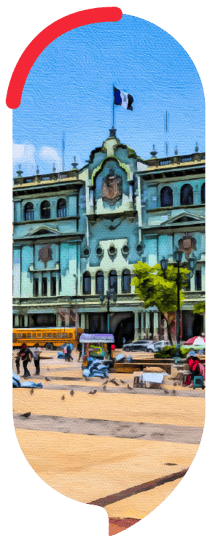
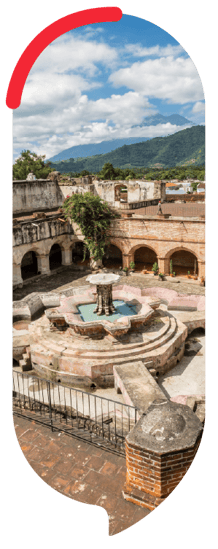
Guatemala City serves as the country’s primary political and financial epicenter, anchoring major multinational headquarters, top-tier legal entities, and key government offices within premium commercial districts like Zone 14, Zone 4, and Zone 10—the capital's renowned Zona Viva. The metropolitan area provides world-class infrastructure for corporate travelers, boasting elite business accommodations such as the Real InterContinental, The Westin Camino Real, and the Hyatt Centric. For high-profile board retreats and exclusive corporate summits, international firms heavily favor the historic, ultra-luxury boutique venues of nearby Antigua Guatemala, where Hotel Casa Santo Domingo stands as the region’s premier choice.
As a stable constitutional republic, Guatemala grants foreign investors equal rights and up to 100% corporate ownership in most sectors, with a minor national security exception restricting land ownership directly along borders. Commercial disputes can be settled efficiently through specialized civil courts or trusted local arbitration hubs like CENAC.
International investor protections are strongly backed by CAFTA-DR, MIGA, and the U.S. DFC, operating alongside domestic competition frameworks that monitor market concentration. Furthermore, global corporations benefit from robust regional integration and free trade agreements with key economic partners like Mexico.
Foreign investors can seamlessly enter Guatemala by expanding through a foreign branch or incorporating a Public Limited Company (Sociedad Anónima), which requires just two shareholders and minimal capital. However, achieving long-term profitability requires precise upfront planning to navigate the country's unique territorial tax system, complex transfer pricing regulations, and strict local labor laws.
Partnering with H&CO eliminates the administrative friction of managing these local compliance and tax requirements. Our global advisors and local experts handle everything from corporate setup and securing a resident Legal Representative to optimizing your payroll structures, delivering a compliant, turnkey market entry that lets you focus entirely on growth.

H&CO : Jun 3, 2026, 3:50:16 PM
Canada consistently ranks as one of the most stable, secure, and competitive economies for foreign investment globally. As a prominent member of both...
1 min read
H&CO : Jul 14, 2026, 5:28:39 PM
New Zealand has built a reputation as one of the easiest and most trustworthy places on earth to launch a company, and that reputation is backed by...
H&CO : Jun 4, 2026, 4:12:30 PM
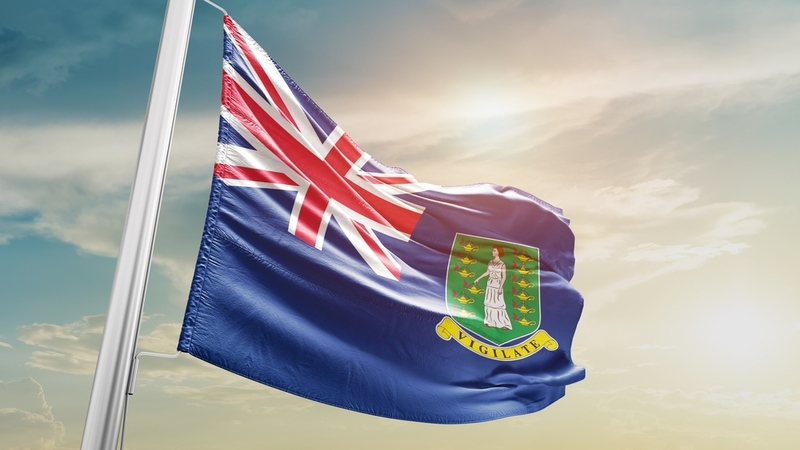
The British Virgin Islands (BVI) stand as one of the world's most stable, secure, and prestigious international financial centers. Thanks to a robust...