


 Argentina
 Brazil
 BVI
BVI Canada
 Chile
Chile Colombia
 Costa Rica
 Curaçao
 Guatemala
 Honduras
 Mexico
 Nicaragua
 Panama
 Peru
Peru Uruguay
 USA
USA Germany
 Luxembourg
 South Africa
 Spain
Spain Switzerland
 The Netherlands
 United Kingdom
 Hong Kong
 India
India New Zealand
 Singapore
 Turkey
 H&CO
H&CO
1 min read
Doing Business in Turkey
 H&CO : Jul 27, 2026, 5:37:09 PM
Turkey stands as an indispensable strategic gateway, physically and economically bridging Europe, Asia, and the Middle East to offer foreign...
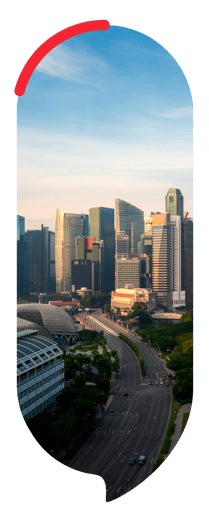
Few places on earth compress as much commercial firepower into so little land as Singapore. This city-state of just over 700 square kilometers has engineered itself into the financial and logistical control tower of Southeast Asia, giving multinational groups a single, highly governed base from which to coordinate operations across a region of more than 650 million consumers. Its position astride the Strait of Malacca, combined with one of the busiest container ports and air-cargo hubs on the planet, means a company headquartered here sits at the literal crossroads of East-West trade.
Beyond geography, Singapore's appeal rests on a rare institutional trifecta: political stability under a parliamentary republic, a corporate legal framework rooted in English common law, and a regulatory culture that treats businesses as partners rather than subjects. The Economic Development Board (EDB) and Monetary Authority of Singapore (MAS) actively court foreign capital rather than merely processing it, giving international investors a government counterpart that is genuinely invested in their long-term success. This combination of predictability and pro-enterprise policy has made the jurisdiction a default choice for regional headquarters, treasury centers, and holding structures alike.
Corporations weighing where to anchor an Asia-Pacific presence tend to converge on the same short list of criteria: rule of law, tax efficiency, talent depth, and connectivity. Singapore ranks at or near the top of virtually every global index built around these exact metrics.
|
|
Strategic Regional Hub Sitting at the heart of Southeast Asia's shipping lanes, Singapore places a regional headquarters within a seven-hour flight of virtually every major Asia-Pacific market, from Tokyo to Sydney to Mumbai. Changi Airport and the Port of Singapore together give companies unmatched physical connectivity for managing distribution networks, sourcing operations, and multi-country subsidiaries from one compact, highly efficient base. A Trusted Common Law Foundation Singapore's legal system descends directly from English common law and is administered by an independent judiciary widely regarded as one of the least corrupt and most efficient in the world. Commercial contracts, intellectual property rights, and shareholder disputes are resolved with a predictability that foreign investors from both common law and civil law backgrounds find immediately familiar and dependable. |
Unrestricted Capital Mobility
Cross-border treasury management is entirely frictionless here, since Singapore imposes no foreign exchange controls and places no restrictions on the repatriation of profits, dividends, or capital. Funds move freely in any currency into and out of the country, giving multinational groups full latitude to centralize cash management, hedge currency exposure, and move earnings back to parent companies without regulatory delay.
A Deep, Multilingual Talent Pool
Companies setting up here draw on a highly educated, globally mobile workforce fluent in English alongside Mandarin, Malay, and Tamil, giving firms a genuine bridge into both Western and Chinese-speaking commercial networks. Decades of deliberate investment in finance, engineering, and technology education have produced a labor market with deep specialist bench strength in banking, logistics, and applied research.
First-Rate Physical and Digital Infrastructure
Business operations here are backed by Changi Airport, consistently rated among the world's finest, and the Port of Singapore, one of the two or three busiest transshipment hubs on the globe. This physical backbone is matched by dense fiber connectivity and a digitally advanced government, ensuring that logistics, communications, and data transfer keep pace with the demands of round-the-clock global commerce.
 |
Population: Home to roughly 6.04 million residents in 2026, Singapore is one of the most densely populated sovereign states in the world, with an urbanization rate approaching 100% across its five administrative regions. Official languages: English, Malay, Mandarin, and Tamil all hold official status, with Malay recognized as the national language for ceremonial purposes. English functions as the working language of government, the courts, and virtually all commercial activity. Currency: The Singapore Dollar (SGD) is managed by the Monetary Authority of Singapore (MAS) through a trade-weighted exchange rate band rather than a fixed peg, giving the country monetary flexibility while maintaining a long track record of low inflation and currency stability. Political system: Singapore is a parliamentary republic with a unicameral Parliament and a President serving as head of state. Government is led by the Prime Minister and Cabinet, drawn from the party holding a parliamentary majority, while an independent judiciary enforces a legal code built on English common law traditions. |
To gauge the security of setting up in Singapore, foreign investors need only look at the consistency of its governance record: decades of uninterrupted political stability, minimal corruption, and a civil service widely regarded as among the most efficient and least politicized in the world. Executive authority sits with the Cabinet, while Parliament handles legislative duties across the country's electoral divisions, producing a low-friction regulatory environment that keeps compliance overhead unusually light for a jurisdiction of this sophistication.
On the economic front, Singapore operates one of the most open, trade-dependent economies on the planet, underpinned by minimal public debt, a strong sovereign credit rating, and one of the largest reserve positions relative to GDP of any nation. Rather than relying on domestic consumption or heavy industry, the country has built its prosperity around high-value services — banking, wealth management, logistics orchestration, and increasingly, deep technology and biomedical research. Backed by an expanding web of free trade agreements and one of the world's largest networks of double taxation treaties, this compact but formidable economy remains a preferred base for regional headquarters and cross-border holding structures.
Foreign entities operate under a corporate framework built for speed, administered primarily through the Accounting and Corporate Regulatory Authority (ACRA), which oversees company incorporation, statutory filings, and public disclosure under the Companies Act. Nearly every administrative step, from name applications to annual return filings, can be completed digitally through ACRA's BizFile+ portal, eliminating the paperwork bottlenecks common in less digitized jurisdictions. Businesses must also align with the Monetary Authority of Singapore's (MAS) financial sector rules where relevant, the Personal Data Protection Act (PDPA) governing data handling, and the intellectual property enforcement standards maintained by the Intellectual Property Office of Singapore (IPOS), which together keep the regulatory environment both rigorous and genuinely business-friendly.
Tax administration in Singapore is handled by the Inland Revenue Authority of Singapore (IRAS) under a territorial and remittance-based system rather than a strict worldwide-income model. Instead of applying a single blanket rate to every dollar of profit, the government layers a flat headline rate with a stack of exemptions calibrated to reward new and growing businesses, meaning the effective tax burden for most small and mid-sized companies lands well below the statutory figure.
| Tax Component | Rate / Threshold | Operational Key Takeaway |
| Corporate Income Tax (CIT) | 17% flat | Applies uniformly to chargeable income for resident and non-resident companies alike; there are no tiered statutory brackets. |
| Start-Up Tax Exemption (SUTE) | Up to 75% | New qualifying companies exempt 75% of the first SGD 100,000 and 50% of the next SGD 100,000 of chargeable income for each of their first three Years of Assessment. |
| Partial Tax Exemption (PTE) | Up to 75% | All other companies exempt 75% of the first SGD 10,000 and 50% of the next SGD 190,000 of chargeable income every Year of Assessment. |
| Goods and Services Tax (GST) | 9% standard | Mandatory registration once taxable turnover exceeds SGD 1 million in a 12-month period; exports and international services are zero-rated. |
| Withholding Tax on Dividends | 0% | Singapore's one-tier system means corporate profits are taxed once at the company level, and dividends are fully exempt in the hands of shareholders. |
| Withholding Tax on Interest, Royalties & Fees | 15% – 17% | Applies to payments made to non-residents, though Singapore's extensive DTA network frequently reduces these rates substantially. |
| Capital Gains Tax | 0% | Singapore levies no general tax on capital gains, making the country a favored base for holding companies and long-term equity investment structures. |
Singapore taxes resident companies on income accrued in or derived from Singapore, plus foreign income only when it is actually remitted into the country, unless that income qualifies for one of several remittance exemptions. This makes the physical and contractual location of core business activity, rather than a company's country of incorporation, the decisive factor in determining its Singapore tax exposure. Multinational groups structuring regional trading or holding operations here should map out exactly where contracts are negotiated, signed, and performed, since that documentation trail often determines whether income is treated as Singapore-sourced at all.
Rather than handing out blanket subsidies, Singapore's incentive architecture is built around targeted schemes administered by EDB, IRAS, and Enterprise Singapore that reward genuine substance and innovation activity. Key mechanisms include:

Economic Landscape & Nearshoring:
Singapore's economic model has never chased manufacturing scale for its own sake; instead, it has built durable advantage around trust, efficiency, and openness to capital. Backed by a AAA sovereign credit rating from every major agency, the country functions as a genuine safe harbor for regional treasury operations, absorbing global volatility far better than most of its neighbors thanks to a deep, diversified services base.
To manage the reality of premium office rents and a tight labor market, many multinational groups adopt a deliberate "anchor-and-extend" model: they place their regional headquarters, treasury function, and IP holding structures in Singapore to capture the benefits of its legal certainty and tax treaty network, then extend operational or back-office functions into lower-cost neighboring markets such as Malaysia, Vietnam, or the Philippines. This produces a lean, compliant regional footprint anchored by a single, highly credible base.
Singapore's growth engine runs on a small number of sectors where it has built structural, defensible advantages rather than a broad industrial base, giving newly arrived companies immediate access to mature, globally connected ecosystems.
Doing business successfully in Singapore requires balancing efficiency with genuine cultural sensitivity, since the country's multiethnic population blends Chinese, Malay, Indian, and Western business norms into a distinctive commercial etiquette. Meetings tend to be punctual, well-prepared, and outcome-oriented, yet relationship-building still matters, particularly with counterparts from Chinese or Malay business backgrounds where trust and long-term rapport often precede major commitments. Success in this market comes from pairing Western-style efficiency with an appreciation for hierarchy, face, and the quiet, considered pace at which trust is established.
Corporate structures in Singapore tend to be moderately hierarchical, with clear decision-making authority resting at senior levels even as day-to-day execution is delegated efficiently down the chain. Meetings typically open with introductions and small talk before turning to substance, and professionals generally favor a direct but courteous communication style, blunt enough to be efficient, but careful to avoid causing a counterpart to lose face in front of colleagues. Written follow-up after meetings is standard practice and is generally expected as a mark of professionalism.
1. Raffles Place & the Central Business District (CBD)
As the historic and still-beating heart of Singapore's financial sector, Raffles Place anchors the CBD alongside Marina Bay, Tanjong Pagar, and Shenton Way. Home to global banking headquarters, law firms, and asset managers, the district offers unmatched prestige and connectivity via the Raffles Place and Tanjong Pagar MRT interchanges, making it the natural choice for financial institutions, regional headquarters, and professional services firms.
2. Marina Bay
An extension of the CBD built on reclaimed land, Marina Bay concentrates a dense cluster of banks, sovereign wealth institutions, and premium commercial towers around Marina Bay Financial Centre. Its integration with Gardens by the Bay, top-tier hotels, and the Suntec convention complex makes it a preferred address for firms that combine high-level client entertaining with core financial operations.
3. One-North
Purpose-built as Singapore's innovation and research district, one-north houses Biopolis, Fusionopolis, and a fast-growing cluster of technology and biomedical startups alongside major research institutes. Direct MRT access and proximity to the National University of Singapore give the district an unusually deep bench of research talent, making it the natural home for R&D-intensive and deep-tech ventures.
4. Jurong Innovation District and Jurong Lake District
Positioned in Singapore's western growth corridor, this emerging hub is being developed into the country's second CBD, purpose-built for advanced manufacturing, sustainability-focused enterprises, and Industry 4.0 operations. Its proximity to Tuas Port and two of Singapore's top universities makes it an increasingly attractive base for precision engineering, logistics, and clean-technology companies seeking lower costs without sacrificing connectivity.
Finding the right venue for a high-stakes negotiation or an important client dinner is second nature in Singapore's business districts. In Raffles Place, the private dining rooms atop Republic Plaza and One Raffles Place have long served as discreet, efficient settings for closing regional deals over an unhurried lunch. Around Marina Bay, CÉ LA VI's skyline setting combines striking views with a menu built for entertaining visiting executives, while more understated establishments in Tanjong Pagar cater to founders and dealmakers who prefer a quieter, relationship-first setting over a display of extravagance.
Singapore's role as a regional hub is reinforced by a concentrated diplomatic and institutional footprint, with most foreign embassies and consulates clustered around Orchard Road, Tanglin, and the Napier Road corridor, close to government offices and major international schools. Meanwhile, bodies such as the Singapore Business Federation, sector-specific trade associations, and international chambers of commerce operate primarily out of the CBD, giving newly arrived companies fast access to policy advocacy channels, cross-border business councils, and a well-organized network of peer companies navigating the same regulatory landscape.
For multinational enterprises mapping out a Southeast Asian expansion, positioning a Singapore entity within reach of these institutional anchors provides direct access to policymakers, a mature professional services ecosystem, and one of the most secure, transparent commercial environments anywhere in the world.
Ready to establish your business in Singapore? H&CO's international tax and entity management specialists can guide your company through incorporation with ACRA, tax structuring with IRAS, and ongoing compliance, ensuring a smooth, fully compliant entry into one of Asia's most trusted commercial hubs. Contact the H&CO team today to build your Southeast Asian growth strategy on solid ground.


1 min read
H&CO : Jul 27, 2026, 5:37:09 PM
Turkey stands as an indispensable strategic gateway, physically and economically bridging Europe, Asia, and the Middle East to offer foreign...

1 min read
H&CO : Jul 8, 2026, 12:14:13 PM
Expanding your corporate footprint into Asia requires a jurisdiction that balances regulatory efficiency, absolute capital freedom, and strategic...
1 min read
H&CO : Jun 23, 2026, 11:30:38 AM
Peru has rapidly emerged as one of Latin America's most dynamic economies, making it a standout choice for foreign investment and doing business in...