


 Argentina
 Brazil
 BVI
BVI Canada
 Chile
Chile Colombia
 Costa Rica
 Curaçao
 Guatemala
 Honduras
 Mexico
 Nicaragua
 Panama
 Peru
Peru Uruguay
 USA
USA Germany
 Luxembourg
 South Africa
 Spain
Spain Switzerland
 The Netherlands
 United Kingdom
 Hong Kong
 India
India New Zealand
 Singapore
 Turkey
 H&CO
H&CO
1 min read
Doing Business in New Zealand
 H&CO : Jul 14, 2026, 5:28:39 PM
New Zealand has built a reputation as one of the easiest and most trustworthy places on earth to launch a company, and that reputation is backed by...
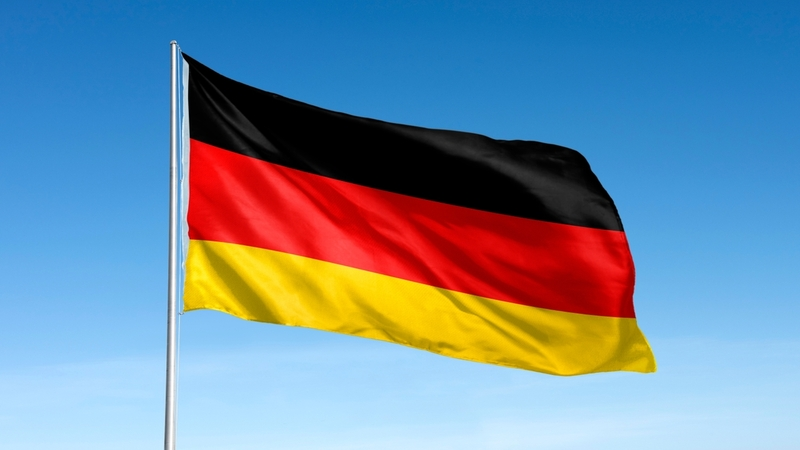
As Europe’s economic powerhouse and one of the world’s leading exporters, Germany offers unparalleled opportunities for businesses seeking stability and long-term growth. For companies planning an international expansion, investing in Germany means gaining direct access to a highly skilled workforce, world-class infrastructure, and a transparent legal framework that guarantees maximum asset security. In this article, we explore why this strategic market remains a premier destination for foreign capital and how your enterprise can establish a strong foothold in the heart of Europe.
From its dominant automotive and engineering sectors to its extensive network of double taxation treaties, navigating the German business landscape requires a clear understanding of local regulations. We break down the core advantages of doing business in Germany, highlighting key market opportunities and the essential corporate steps needed for a successful launch. Discover how entering the German market can drive your global growth and provide long-term commercial value.
Expanding your enterprise into Germany positions your brand at the absolute center of Europe’s largest and most resilient market. We analyze the strategic advantages that make this nation a premium destination for international companies seeking sustainable growth, legal security, and high-value commercial opportunities.
|
|
Europe’s Largest Economic PowerhouseGermany boasts the highest GDP in the European Union and ranks as the third-largest exporter globally. This economic strength provides foreign investors with a highly lucrative, stable consumer base and a reliable environment for long-term corporate growth. Unmatched Legal and Political StabilityThe German business landscape is built upon a transparent legal framework and predictable political governance. We prioritize this legal certainty because it safeguards intellectual property, enforces contracts reliably, and minimizes operational risks for international firms. Strategic Central Location and InfrastructureSituated in the heart of Europe, Germany serves as the continent's premier logistics hub. Its world-class transport, shipping, and digital networks allow seamless cross-border trade, ensuring your supply chain remains highly efficient across the European single market. |
As a pioneer in advanced manufacturing, green energy, and automotive engineering, Germany offers an unparalleled innovation ecosystem. Expanding here connects your business to state-of-the-art research institutions, tech hubs, and robust corporate R&D networks.
The country's renowned dual-education system produces exceptionally qualified, technically proficient professionals. Accessing this top-tier local talent pool ensures your business expansion maintains high productivity and strict operational excellence from day one.
 |
Population: Approximately 84.5 million inhabitants with an urbanization rate of nearly 78%. Official language: German Currency: Euro (EUR) Political system: Germany operates as a federal parliamentary republic. The Federal Chancellor serves as the head of government and holds executive authority, while the Federal President acts as the head of state in a primarily ceremonial capacity. Legislative power is exercised by a bicameral parliament consisting of the Bundestag (Federal Diet) and the Bundesrat (Federal Council, representing the federal states). The judiciary, led by the Federal Constitutional Court, functions as an entirely independent branch. Economic System: Germany operates a highly developed, social market economy, characterized by its position as an industrial powerhouse with a heavy focus on international trade and foreign direct investment (FDI). The country seamlessly combines private enterprise and free-market dynamics with a strong social safety net. Its resilient model is driven by advanced manufacturing export clusters, cutting-edge automotive and engineering sectors, and the Mittelstand—a robust network of highly specialized small and medium-sized enterprises. |
Germany operates as a highly stable federal parliamentary republic, structured around a robust framework of democratic governance and the rule of law. Executive power is exercised by the Federal Chancellor as the head of government, while legislative authority is shared between the Bundestag and the Bundesrat, ensuring balanced representation across its 16 autonomous federal states (Länder). For international businesses, this political framework provides an exceptionally transparent, predictable, and secure regulatory environment, effectively minimizing institutional risks and safeguarding long-term investments through a fiercely independent judiciary.
Economically, the nation thrives under a sophisticated social market economy (Soziale Marktwirtschaft) that seamlessly pairs free-market capitalism with a strong social safety net and regulatory oversight. As Europe's largest industrial powerhouse and the world's third-largest exporter, the German economic model relies heavily on advanced manufacturing clusters—such as the automotive, chemical, and engineering sectors—complemented by the Mittelstand, a powerful network of highly specialized, innovative small and medium-sized enterprises. This resilient ecosystem, combined with open-market policies and integration into the European single market, establishes Germany as a premier global hub for foreign direct investment (FDI) and cross-border commercial expansion.
Germany operates under a highly structured civil law jurisdiction based on comprehensive statutory codes—such as the Civil Code (BGB) and Commercial Code (HGB)—which provides international businesses with an exceptionally predictable and transparent legal environment. We emphasize that this robust framework guarantees rigorous protection for intellectual property rights, reliable contract enforcement through specialized commercial courts, and strict compliance with European Union regulations, including advanced data privacy standards like the GDPR. While entering the German market requires navigating meticulous administrative steps and proactive Foreign Direct Investment (FDI) screening via the Federal Ministry for Economic Affairs (BMWK) for sensitive sectors, this structured regulatory landscape completely removes operational ambiguity, effectively safeguarding foreign capital and establishing unshakeable legal certainty for your global expansion.
For enterprises establishing an operational footprint in Germany, the corporate tax architecture is managed federally by the Federal Central Tax Office (BZSt) and administered by local financial authorities (Finanzamt). Unlike strictly territorial regimes, Germany implements a worldwide income tax system for resident corporations, meaning that globally sourced corporate profits are subject to taxation unless specifically protected or exempted under an extensive network of Double Taxation Treaties (DTTs).
| Tax Category | Standard Rate | Key Conditions & Details (2026 Updates) |
| Corporate Income Tax (Körperschaftsteuer - KSt) | 15% | A flat nationwide tax levied uniformly on the net taxable income of all resident corporate entities. |
| Solidarity Surcharge (Solidaritätszuschlag - SolZ) | 5.5% | Assessed as a fixed surcharge directly on the 15% corporate tax liability, resulting in an effective federal rate of 15.825%. |
| Trade Tax (Gewerbesteuer - GewSt) | 8.75% – 20.3% | A mandatory municipal tax on business profits. The final rate depends entirely on the local municipality's multiplier (Hebesatz), bringing the total combined corporate tax burden to approximately 30%. |
| Value Added Tax (Umsatzsteuer - USt) | 19% | The standard consumption tax applied to goods and services. A reduced rate of 7% applies to essentials and restaurant food services. |
| Real Estate Transfer Tax (Grunderwerbsteuer) | 3.5% – 6.5% | A one-time tax levied on the purchase price of real estate or commercial land. Rates vary dynamically depending on the specific Federal State (Bundesland). |
| Capital Gains Tax | ~1.5% (Effective) | Capital gains from the sale of corporate shares are 95% tax-exempt, provided active minimum equity thresholds are maintained. |
| Dividend Withholding Tax (Kapitalertragsteuer) | 25% (plus SolZ) | The standard rate is 26.375%, but it is routinely lowered to 0% or 5% under active Double Taxation Treaties (DTTs) or the EU Parent-Subsidiary Directive. |
| Real Estate Tax (Grundsteuer) | Variable | An annual property tax levied by municipalities on the assessed value of corporate real estate, utilizing localized multipliers. |
| Employer Social Security Contributions | ~21.15% | A mandatory corporate payroll allocation covering health, long-term care, pension, and unemployment insurance up to statutory contribution ceilings. |
Local corporate entities face additional tax obligations administered directly at the municipality level, preventing a uniform nationwide corporate tax rate. The primary municipal levy is the Trade Tax (Gewerbesteuer), which utilizes a uniform federal base rate of 3.5% that is multiplied by a local municipal multiplier (Hebesatz). This multiplier varies significantly depending on the corporate location, resulting in an effective trade tax rate ranging between 8.75% and 20.3%. Consequently, the total combined corporate tax burden in Germany typically averages around 30%. Furthermore, companies owning commercial property must factor in the Real Estate Tax (Grundsteuer), a localized asset tax that is calculated based on the assessed value of the corporate real estate and the specific municipal rate.
While Germany does not operate traditional, deregulated free trade zones with complete corporate income tax holidays, we leverage highly competitive federal and European structural incentive programs designed for manufacturing, advanced R&D, and green technology providers. Following recent legislative overhauls under the Growth Opportunities Act (Wachstumschancengesetz), Germany provides permanent, high-value financial safeguards and subsidies for international investors. Key advantages include:
Location Dictates the Final Tax Bill: Because the Trade Tax and the Real Estate Transfer Tax are determined regionally, choosing the right municipality is a critical step in our expansion planning. Establishing operations in business-friendly suburbs can significantly lower your effective corporate tax rate compared to major metropolitan centers.
Absolute Legal Protection via DTTs: We ensure that international enterprises leverage Germany’s network of over 90 Double Taxation Treaties. This robust framework guarantees that cross-border revenue, royalties, and distributed dividends are shielded from double exposure, providing long-term predictability for foreign capital.
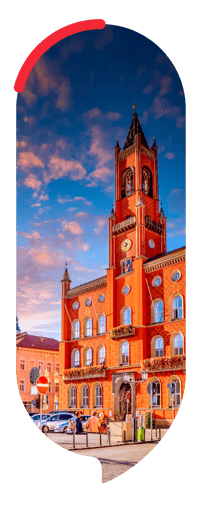
Economic Landscape & Nearshoring: Germany stands as Europe’s premier economic powerhouse, guaranteeing foreign investors absolute legal parity, seamless capital mobility, and a matchless central position. As the core engine of the European Single Market, it serves as the ultimate hub for multinational enterprises looking to optimize regional nearshoring, secure robust cross-border supply chains, and access a high-purchasing-power consumer base.
As Germany's strongest economic driver, the automotive sector leads global innovation in electric vehicles, autonomous driving, and smart mobility. Enterprises integrating into this elite supply chain can leverage high-value structural incentives—such as the R&D Tax Allowance (Forschungszulagengesetz) and direct GRW cash grants—ensuring a highly predictable environment where foreign investments fully preserve their corporate rights and fiscal subsidies.
German business culture is deeply rooted in efficiency, meticulous planning, and a profound respect for structure and organization. We observe that professional environments place a premium on technical competence, data-driven decision-making, and a clear separation between personal and professional life. Punctuality is viewed as a fundamental sign of respect, where schedules are treated as binding agreements and meetings strictly follow pre-established agendas. For international enterprises, adapting to this disciplined corporate etiquette is essential, as building trust in the German market relies entirely on delivering reliable results, demonstrating operational expertise, and honoring compliance standards.
When navigating corporate hierarchies and communication styles in Germany, explicit clarity and directness always take precedence over diplomacy or sugarcoating. German organizations generally maintain a well-defined, vertical hierarchical structure where roles, responsibilities, and reporting lines are clearly delineated, ensuring that proper channels are respected at all times. Communication is characteristically low-context, meaning that information is exchanged directly, precisely, and literally, which foreign investors should view as a sign of professional honesty and efficiency rather than bluntness. While final decisions flow down from senior leadership, the internal planning process heavily relies on consensus-building across specialized teams, requiring thoroughly documented data and well-substantiated arguments to move projects forward.
When identifying the premium locations for business operations in Germany, the strategy shifts from general regions to specific business districts within the country’s primary corporate hubs. We analyze the top commercial and business districts across Germany's major economic centers, tailored by industry alignment and corporate infrastructure.
Berlin:
Frankfurt (The Financial District):
Munich:
Hamburg:
Düsseldorf:
The political and corporate heart of the capital. It is the premier location for international headquarters, public affairs, and major consultancies due to its direct proximity to federal government institutions.
The financial capital of continental Europe. Home to the ECB and major global banks, it is the mandatory destination for international financial services, asset management, fintech, and tier-one corporate law firms.
A high-prestige commercial core hosting elite private banks, premium investment funds, and luxury brands. It offers unparalleled corporate prestige and direct access to one of the most affluent markets in Germany.
A futuristic waterfront district serving as the country's gateway to international trade. It features ultra-modern office infrastructure, making it the optimal choice for global trading houses, maritime logistics, and renewable energy giants.
The undisputed fashion, retail, and telecommunications capital of Western Germany. Centered around the famous Königsallee, it acts as a primary landing zone for international consumer brands and foreign direct investment.
Securing a flawless venue for high-stakes corporate lunches or discreet evening negotiations is effortless within Germany's major economic hubs. In the heart of Berlin, Borchardt stands as a legendary culinary institution, famous for its refined French-German menu, historic upscale atmosphere, and its position as the ultimate meeting point for political leaders and top-tier global executives closing critical deals. For an elite waterfront experience, Grill Royal along the Spree River delivers exceptional premium cuts and a sophisticated, cosmopolitan ambiance that caters perfectly to international corporate travelers and high-profile client entertaining.
Furthermore, establishments like Lorenz Adlon Esszimmer—located adjacent to the historic Brandenburg Gate—provide dedicated private dining salons designed specifically for uninterrupted, confidential business discussions. These world-class venues perfectly align with the fast-paced, rigorous schedules of modern decision-makers, guaranteeing that both gastronomic excellence and professional privacy remain completely uncompromised.
The nucleus of Germany’s international diplomatic presence is strategically anchored within Berlin's most prestigious and secure central sectors, primarily concentrated in Mitte (around Pariser Platz and Unter den Linden) and the historic Diplomatenviertel south of the Tiergarten. These elite districts host prominent foreign missions, including the embassies of the United States, France, Great Britain, and Japan, forming a highly secure and sophisticated geopolitical network. For international enterprises expanding operations, establishing a corporate presence near these neighborhoods guarantees an unshakeable security infrastructure alongside seamless, direct access to the federal government district, premier financial institutions, and multinational corporate headquarters.

1 min read
H&CO : Jul 14, 2026, 5:28:39 PM
New Zealand has built a reputation as one of the easiest and most trustworthy places on earth to launch a company, and that reputation is backed by...

H&CO : May 27, 2025, 10:56:25 AM
Colombia is the third most populous country in Latin America, with a population exceeding 50 million inhabitants. The population is relatively young,...
H&CO : Jul 3, 2026, 12:39:05 PM
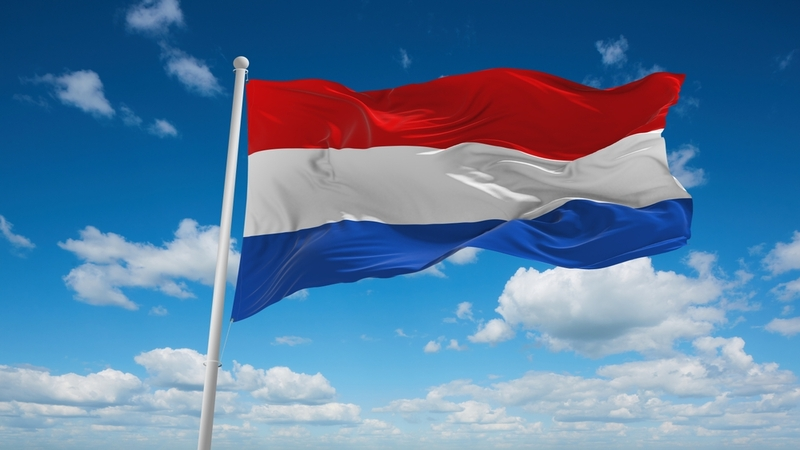
Expanding into the European market requires a strategic hub with robust infrastructure and a pro-business environment. Doing business in the...