


 Argentina
 Brazil
 BVI
BVI Canada
 Chile
Chile Colombia
 Costa Rica
 Curaçao
 Guatemala
 Honduras
 Mexico
 Nicaragua
 Panama
 Peru
Peru Uruguay
 USA
USA Germany
 Luxembourg
 South Africa
 Spain
Spain Switzerland
 The Netherlands
 United Kingdom
 Hong Kong
 India
India New Zealand
 Singapore
 Turkey
 H&CO
H&CO
1 min read
Doing Business in Singapore
 H&CO : Jul 21, 2026, 5:12:55 PM
Few places on earth compress as much commercial firepower into so little land as Singapore. This city-state of just over 700 square kilometers has...
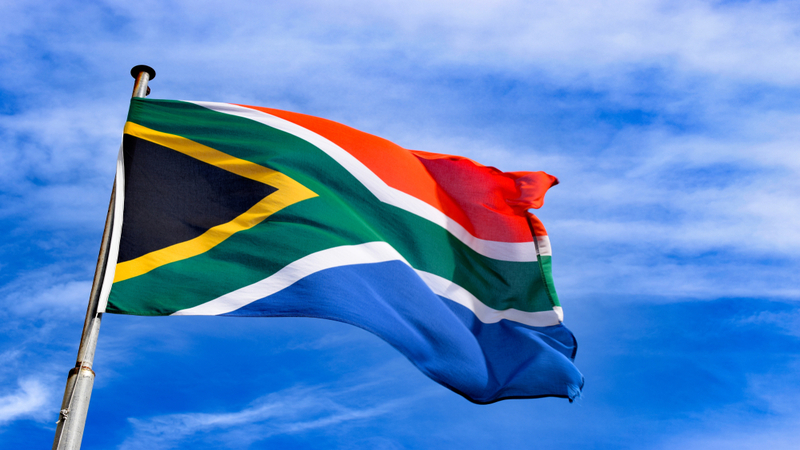
As Africa’s most industrialized and diversified economy, South Africa stands out as a premier destination for global businesses looking to tap into the continent's immense potential. Boasting a world-class financial sector, advanced infrastructure, and a robust manufacturing base, the nation offers unparalleled opportunities across high-growth sectors such as renewable energy, technology, and sophisticated financial services. For international companies, it represents not just a vibrant domestic market, but also a strategic, well-connected gateway to the broader African continent through established regional trade networks.
However, capturing these opportunities requires navigating a distinct and highly specific regulatory landscape. From managing corporate registrations via the CIPC and handling exchange control regulations to aligning with local B-BBEE economic integration policies and complex labor laws, the operational path to expansion can be daunting for entering enterprises. This is where H&CO comes in; our global expansion experts provide comprehensive, end-to-end support for entity incorporation, international tax compliance, and corporate governance, stripping away the operational complexity and making it easier than ever to seamlessly establish and grow your business in South Africa.

South Africa stands as a highly dynamic commercial market, offering unmatched access to sub-Saharan Africa’s consumer base through integrated regional trade networks. The country's combination of deep financial markets, robust legal protections, and a sophisticated industrial framework makes it a prime destination for international capital seeking long-term growth.
Driven by ongoing structural reforms like Operation Vulindlela and record-breaking pledges at national investment conferences, the country is actively opening its doors to private sector participation. Key investment opportunities have shifted toward modernizing network industries, localized manufacturing, and digital innovation, creating highly profitable entry points for global enterprises.
The green economy represents South Africa's fastest-growing investment sector, heavily driven by the privatization of power generation and a structured pipeline targeting 105 GW of new capacity by 2039. Private equity and institutional capital are pouring into independent power producer (IPP) projects, utility-scale solar installations, onshore wind farms, and battery storage infrastructure. As global supply chains prioritize decarbonization, massive opportunities exist for international businesses to manufacture components locally, retrofit commercial properties for energy efficiency, and pioneer green hydrogen initiatives.
Public-private partnerships (PPPs) are modernizing South Africa’s critical logistics networks, creating high-yield openings in rail, port development, and water infrastructure. With the government prioritizing structural reforms to eliminate freight and transport bottlenecks, the private sector is increasingly stepping in to manage, fund, and optimize transport corridors. Private infrastructure funds are seeing record capital inflows, particularly for projects focusing on digital communications, smart water management systems, and harbor upgrades designed to facilitate smoother global trade.
South Africa is Africa’s premier tech hub, driven by a booming financial technology ecosystem and a highly cost-competitive global business outsourcing sector. Key metropolitan areas attract substantial tech investment in software development, cybersecurity, SaaS, and digital banking solutions. Concurrently, the Global Business Services (GBS) or Business Process Outsourcing (BPO) sector is expanding rapidly, leveraging a highly skilled, English-fluent talent pool and favorable time zones to service multinational clients in North America, Europe, and the UK.
Industrial investments are anchored in high-value automotive manufacturing and export-ready agricultural processing, benefiting from established global supply chain links. Major multinational automakers continue to deploy significant capital to transition local assembly plants toward clean energy and electric vehicle component production. In tandem, the agro-processing sector offers lucrative returns through the localized processing, cold-chain logistics, and premium export of high-demand agricultural products like wine, fruit, and indigenous goods.

|
Population: Approximately 62 million inhabitants, highly urbanized and concentrated within major economic hubs like Gauteng (Johannesburg/Pretoria), the Western Cape (Cape Town), and KwaZulu-Natal (Durban), which drive the nation's industry. Official Languages: While South Africa recognizes 12 official languages, English is the universal standard for business, governance, and higher education, ensuring seamless communication across all corporate, legal, and international trade sectors. Currency: The South African Rand (ZAR) is the official currency under a free-floating exchange rate system. Managed by the South African Reserve Bank (SARB), it ranks among the most liquid and heavily traded emerging market currencies globally. Political System: The country operates as a stable constitutional democracy under a parliamentary republic. Supported by an independent judiciary and a highly progressive constitution, its legal framework guarantees robust protections for foreign direct investment (FDI). Economic System: As Africa's most industrialized and diversified economy, it serves as a strategic regional gateway. The market-driven GDP is anchored by world-class financial services, advanced manufacturing, a dominant mining sector, and strong corporate governance standards. |
Choosing South Africa for corporate expansion unlocks direct access to sub-Saharan Africa's most mature commercial marketplace. The nation serves as a primary regional anchor, combining advanced maritime and land logistics with deep capital markets to connect global enterprises with emerging continental consumers. Backed by the Johannesburg Stock Exchange (JSE) and a highly sophisticated banking system, it delivers a secure, transparent, and liquid environment for international capital.
Operational growth is heavily supported by targeted fiscal incentives and an extensive network of double taxation treaties that protect international profits. Through strategically located Special Economic Zones (SEZs), businesses enjoy reduced corporate tax rates, customs relief, and dedicated infrastructure support. Coupled with its central role in the African Continental Free Trade Area (AfCFTA), the jurisdiction stands out as a highly compliant, cost-effective base for driving continental sales.
South Africa’s corporate framework operates under a sophisticated hybrid legal system regulated by the Companies Act and administered by the CIPC. Corporate governance is anchored by high transparency standards and the globally recognized King Reports. For successful market entry and long-term compliance, international businesses must successfully navigate robust local labor protections, align with the Broad-Based Black Economic Empowerment (B-BBEE) transformation framework, and adhere to capital repatriation guidelines managed by the South African Reserve Bank (SARB).
Navigating the corporate tax landscape in South Africa is a foundational step for international businesses establishing a local presence. Administered by the South African Revenue Service (SARS), the country features a transparent, residency-based framework where domestic companies are taxed on their worldwide income, while non-resident entities are liable solely on South African-sourced revenue.
The corporate fiscal environment effectively balances a competitive baseline flat rate with specialized transactional levies, optimized capital gains rules, and an extensive network of double taxation treaties engineered to streamline cross-border profit allocations and safeguard foreign direct investment.
|
Tax Type |
Standard Rate |
Key Application & Compliance |
|
Corporate Income Tax (CIT) |
27% |
Flat rate applied to net taxable corporate income; qualifying Small Business Corporations (SBCs) with turnover under ZAR 20 million benefit from tiered rates starting at 0%. |
|
Value-Added Tax (VAT) |
15% |
Standard indirect tax levied on the supply of goods and services; compulsory registration applies to enterprises whose annual taxable turnover exceeds ZAR 2.3 million. |
|
Dividends Tax |
20% |
A withholding tax triggered upon profit distributions to shareholders, which can be fully exempted for local corporate recipients or reduced via active Double Taxation Agreements (DTAs). |
|
Capital Gains Tax (CGT) |
21.6% (Effective) |
Calculated using an 80% corporate inclusion rate on asset disposal profits, which is then taxed at the standard 27% baseline corporate income tax rate. |
|
Withholding Taxes (WHT) |
15% |
Fixed withholding rate levied on cross-border outlays to non-residents covering royalties, interest payments, and executive service fees, subject to treaty relief. |
|
Skills Development Levy (SDL) |
1% |
Mandatory employer tax dedicated to local workforce upskilling, compulsory for all corporate entities with an annual employee payroll exceeding ZAR 500,000. |
To accelerate industrialization and attract foreign direct investment (FDI), South Africa’s Department of Trade, Industry and Competition (the dtic) administers a robust framework of financial incentives. These programs are strategically engineered to reduce capital expenditure risks for international firms targeting high-yield sectors like green energy, advanced manufacturing, and global outsourcing.

|
South Africa’s commercial ecosystem is demonstrating strong institutional resilience, marking six consecutive quarters of steady GDP growth heading into mid-2026. Following sovereign credit rating upgrades by global agencies and the successful stabilization of core macroeconomic fundamentals, international investor confidence has experienced a major resurgence. This positive shift was highlighted at the landmark South Africa Investment Conference (SAIC 2026), which secured a record-breaking R889.8 billion in private and foreign capital pledges across 81 high-impact projects, cementing the nation’s status as the primary financial and corporate destination on the continent. Driven by the government's Operation Vulindlela structural reforms, the business landscape is rapidly opening up to private sector participation across key network industries. Unprecedented investment opportunities exist within the deregulated green energy sector—backed by a 105 GW expansion pipeline—and the logistics network, where private entities are securing direct rail and port terminal concessions. Combined with an advanced digital infrastructure and competitive costs, South Africa provides a highly transparent, market-driven environment for foreign enterprises scaling across sub-Saharan trade pathways. |
South Africa Business Culture
South Africa's corporate environment is a dynamic fusion, blending Anglo-European professional structures with the deeply rooted African philosophy of Ubuntu—which emphasizes collective success, mutual respect, and interconnectedness. Navigating this marketplace successfully requires a balance between technical corporate proficiency and authentic relationship-building, as local executives prioritize establishing personal alignment and mutual trust before finalizing commercial commitments.
While historically structured around rigid, top-down models, contemporary South African corporate hierarchies are increasingly collaborative and consensus-driven. Decision-making frequently involves consultation across multiple management tiers to ensure stakeholder alignment, meaning that procurement and approval timelines can take longer than in purely linear markets. While senior executives retain final sign-off authority, mid-level operational leaders wield substantial influence during the evaluation phase, making it essential to engage all organizational levels with equal professional merit.
English serves as the undisputed language of commerce, finance, and law across all South African corporate hubs. Business communication values transparency, directness, and a straightforward presentation of facts, with local professionals reacting poorly to hyperbole or overly aggressive sales pitches. Punctuality is strictly expected for all corporate engagements; arriving late to a scheduled meeting is viewed as a sign of unprofessionalism, regardless of municipal traffic conditions.
Economic activity is divided between the financial powerhouse of Johannesburg and the thriving commercial and tech hub of Cape Town. For international firms setting up regional headquarters, three distinct corporate enclaves offer world-class infrastructure:
To facilitate high-stakes negotiations and foster cross-border partnerships, South Africa offers an exceptional luxury hospitality and culinary landscape:
1 min read
H&CO : Jul 21, 2026, 5:12:55 PM
Few places on earth compress as much commercial firepower into so little land as Singapore. This city-state of just over 700 square kilometers has...

H&CO : May 26, 2025, 2:49:07 PM
Doing business in Brazil offers significant opportunities, but navigating the country's complex business regulations requires careful planning, its...

1 min read
H&CO : Jul 8, 2026, 12:14:13 PM
Expanding your corporate footprint into Asia requires a jurisdiction that balances regulatory efficiency, absolute capital freedom, and strategic...