


 Argentina
 Brazil
 BVI
BVI Canada
 Chile
Chile Colombia
 Costa Rica
 Curaçao
 Guatemala
 Honduras
 Mexico
 Nicaragua
 Panama
 Peru
Peru Uruguay
 USA
USA Germany
 Luxembourg
 South Africa
 Spain
Spain Switzerland
 The Netherlands
 United Kingdom
 Hong Kong
 India
India New Zealand
 Singapore
 Turkey
 H&CO
H&CO
Doing Business in Guatemala
 H&CO : Jun 9, 2026, 12:15:36 PM
As Central America’s economic powerhouse, Guatemala has established itself as a premier nearshore hub for global manufacturing and digital services....
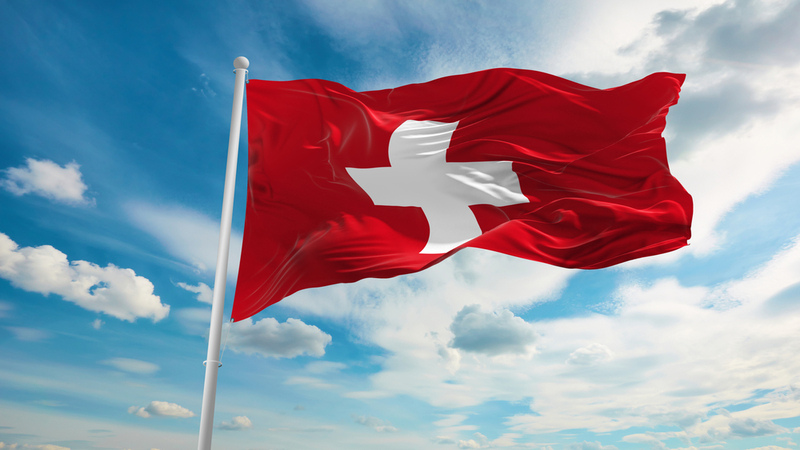
Expanding a company globally requires a precise balance of fiscal stability and growth potential, doing business in Switzerland is one of the most strategic moves for international enterprises. Renowned for its resilient economy, elite intellectual property protection, and highly competitive combined corporate tax rates ranging between 11.9% and 20.5%, the Swiss ecosystem offers a premium launchpad for sustainable growth. For leadership teams planning a Swiss market entry, leveraging the country's unparalleled financial sector, strong currency (CHF), and robust network of free trade agreements provides an immediate competitive advantage in Europe and beyond.
Successful corporate expansion into Switzerland requires a clear understanding of its unique three-tier tax system and mandatory local substance rules. While 100% foreign ownership is fully permitted, expanding enterprises must ensure compliance by appointing at least one managing director who is a legal resident of Switzerland. This operational roadmap breaks down the essential compliance frameworks, regulatory timelines, and cantonal tax nuances necessary to establish a highly optimized, legally sound Swiss presence.
Choosing Switzerland for corporate expansion anchors your global business in one of the world's most stable, innovation-driven economies. Combining an unparalleled financial infrastructure with a business-first regulatory environment and strategic European positioning, a Swiss market entry provides international companies with a highly predictable, premium foundation for long-term growth.
|
|
Unmatched Economic & Currency StabilityOperating in Switzerland protects your corporate capital through the strength of the Swiss Franc (CHF). This legendary currency stability acts as a safe-haven asset, significantly mitigating inflation risks and safeguarding corporate assets during periods of global market volatility. Highly Competitive Corporate TaxationWith a combined federal, cantonal, and communal tax rate ranging between 11.9% and 20.5%, Switzerland offers one of the lowest corporate tax burdens in the developed world. This is further optimized by an extensive global network of double taxation treaties that dramatically reduce cross-border withholding taxes. World-Class Innovation & Talent PoolAs a perennial leader in global innovation indexes, Switzerland grants expanding businesses immediate access to an elite, highly educated, and multilingual workforce. The ecosystem actively rewards innovation through powerful fiscal incentives, including cantonal Patent Boxes and generous R&D super-deductions. |
Nestled in the geographical heart of Europe, Switzerland offers seamless logistical connectivity and state-of-the-art digital infrastructure. While maintaining independence, it provides friction-free access to the European Single Market alongside a vast network of over 30 independent free trade agreements worldwide.
Swiss public authorities are highly accessible and collaborative, allowing companies to secure transparent, binding advance tax rulings before making major investments. This predictable regulatory environment is paired with highly flexible labor laws and world-renowned intellectual property protections designed to support corporate scaling.
 |
Population: Home to roughly 9 million residents, the Swiss demographic landscape features a high concentration within key economic hubs, maintaining a steady urbanization rate of around 74%. Official language: Switzerland uniquely recognizes four national languages: German, French, Italian, and Romansh. Despite this multilingual framework, English is universally utilized as the standard vehicle for international corporate governance, legal contracts, and global trade. Currency: Swiss Franc (CHF), globally recognized as a premier safe-haven asset and a foundational pillar of international financial stability. Political system: Switzerland is structured as a remarkably stable federal directorial republic, uniquely integrated with instruments of direct democracy that allow citizens a direct vote on legislative changes. Executive authority is not held by a single individual, but is instead vested collectively in a seven-member executive council known as the Federal Council. The President of the Confederation changes annually among these members, acting as a first among equals in a largely ceremonial role. Legislative duties are executed by the bicameral Federal Assembly, which comprises the National Council and the Council of States, while the legal framework remains anchored by a fully autonomous Federal Supreme Court. |
To understand the secure landscape of doing business in Switzerland, look first to its unique federal directorial republic and direct democracy system. Rather than relying on a single head of state, executive authority is shared among a seven-member Federal Council, while legislative power sits with the bicameral Federal Assembly representing 26 self-governing cantons. Consequently, this highly decentralized governance creates an incredibly transparent, strike-free regulatory environment that minimizes institutional risks and safeguards corporate interests via an independent judiciary.
From a financial perspective, the Swiss economic model excels as an innovation-driven free market built on low public debt and the unmatched stability of the Swiss Franc (CHF). Instead of mass manufacturing, the economy prioritizes high-margin export clusters like pharmaceuticals, life sciences, precision microtechnology, and specialized wealth management. Backed by a robust network of agile SMEs and extensive global free trade agreements, this resilient marketplace stands out as a premier destination for corporate headquarters and international commercial expansion.
The legal and regulatory framework in Switzerland operates on a stable civil law tradition that combines federal legislation with cantonal autonomy, offering unmatched legal certainty for global corporations. Characterized by minimal bureaucracy and a highly collaborative public sector, the Swiss business environment supports modern digital efficiency through fully remote electronic company incorporation and advanced electronic signatures. Simultaneously, the jurisdiction maintains strict alignment with premium international compliance standards, including GDPR-equivalent data privacy under the Swiss Federal Data Protection Act (FDPA) and rigorous FINMA-regulated anti-money laundering frameworks.
Taxes operate on a highly competitive, three-tier system levied at the federal, cantonal, and communal levels, offering one of the most attractive fiscal climates in Europe. While the statutory federal corporate income tax (CIT) is a flat 8.5% on profit after tax (which translates to approximately 7.83% on pre-tax profit due to tax deductibility), the total effective corporate tax rate varies depending on the enterprise's municipal location. Across the 26 sovereign cantons, combined effective profit tax rates generally range between 11.9% and 20.5%, which are complemented by a local corporate capital tax levied on a company's net equity.
| Tax Component / Jurisdiction | Effective Rate | Operational Key Takeaway |
| Federal Corporate Tax (CIT) | 8.5% (approx. 7.83% pre-tax) | Flat rate applied uniformly nationwide; corporate taxes paid are fully tax-deductible. |
| Canton of Zug (ZG) | ~11.9% | The lowest-tax canton in Switzerland; primary global hub for crypto, tech, and holding setups. |
| Canton of Lucerne (LU) | ~12.3% | Highly competitive Central Swiss jurisdiction; actively lowers local rates to attract expanding SMEs. |
| Canton of Geneva (GE) | ~14.7% | The premier corporate and financial center for French-speaking Switzerland and international trade. |
| Canton of Zurich (ZH) | ~19.7% | Switzerland’s largest economic powerhouse; offers the deepest local labor and financial talent market. |
| Canton of Bern (BE) | ~20.5% | Represents the upper ceiling of Swiss corporate profit taxation; serves as the political capital. |
| Cantonal Capital Tax | 0.001% – 0.5% | Annual tax levied strictly on corporate net equity; many cantons allow an offset against profit tax. |
| Standard Value-Added Tax (VAT) | 8.1% | Low entry threshold; mandatory registration only triggers if global annual turnover exceeds CHF 100,000. |
Cantonal and Communal Fiscal Obligations
Regional variations play a decisive role in shaping a company's final tax liability, as Switzerland does not impose a single nationwide rate on corporate profits. Beyond the flat federal tax, enterprises face cantonal and communal corporate income taxes, which utilize local multipliers that fluctuate depending on the specific municipality. This dual-layered local taxation determines the total effective corporate tax burden, keeping the Swiss average between an attractive 11.9% and 20.5%. Additionally, corporate real estate ownership may trigger cantonal or municipal property taxes (Liegenschaftssteuer) and real estate transfer taxes, depending on the canton where the asset is situated.
Fiscal Incentives & Innovation-Driven Frameworks
Rather than relying on direct cash subsidies, the Swiss corporate ecosystem offers highly lucrative, structural tax reliefs engineered to reward high-value investment, corporate scaling, and advanced research. Aligned with OECD global standards, Switzerland provides highly stable financial mechanisms that heavily reduce the operational cost of innovative ventures. Strategic benefits include:
Economic Landscape & Nearshoring:
Instead of measuring success by raw volume, the Swiss economic model prioritizes value density, structural agility, and institutional safety. Maintaining a top-tier A1 stability rating, Switzerland stands out as one of the world's most resilient economies, with real GDP growth projected at 1.3% in 2026 and an exceptionally low inflation rate hovering around 0.6%. For global enterprises executing a Swiss market entry, this macroeconomic predictability provides an elite operational buffer against broader European or global volatility.
To mitigate high local labor costs, enterprises executing a corporate expansion into Switzerland leverage a strategic "right-shoring" blueprint. Corporations position their high-margin administrative core, regional headquarters, and IP management within low-tax Swiss cantons to capitalize on robust legal frameworks and the stable Swiss Franc (CHF). They then seamlessly connect this Swiss entity to nearshore technical hubs in European jurisdictions like Spain or Poland, achieving a highly optimized, cost-efficient, and fully compliant operational footprint.
Key Industrial & Service Sectors
The commercial architecture driving doing business in Switzerland bypasses mass assembly to dominate high-margin, specialized niches, dividing its economic output between high-tech industry (25.6% of GDP) and premium services (73.7% of GDP). This highly developed distribution allows international firms to seamlessly integrate into existing, elite B2B networks.
Thriving within the Swiss business culture requires a foundational commitment to punctuality, formal professionalism, and data-driven precision. The local corporate mindset heavily prioritizes understated quality and exhaustive preparation over aggressive sales tactics, focusing instead on long-term institutional trust. Although corporate structures maintain a clear hierarchy, strategic decision-making relies on consensus, which can prolong initial negotiations but ensures frictionless execution later. Ultimately, building profitable local alliances depends on direct yet polite communication, strict adherence to schedules, and respecting clear professional boundaries.
Swiss corporate hierarchies balance clear organizational structures with a strong egalitarian spirit, ensuring managers remain highly accessible and open to feedback. Employees enjoy high levels of workplace autonomy, reflecting a decentralized mindset where decision-making leans heavily toward team consensus rather than unilateral top-down commands. Complementing this framework, the local communication style is characterized by absolute directness, polite sobriety, and a strict reliance on hard data. Business discussions are low-context, literal, and focused entirely on objective facts, completely bypassing emotional persuasion or exaggerated marketing claims to prioritize transparent, reliable outcomes.
1. Zurich: Financial Powerhouse & Tech Ecosystem
As Switzerland's largest economic engine, Zurich is a premier global hub for banking, asset management, and fintech. Backed by world-class institutions like ETH Zurich, the city has also evolved into Europe’s leading digital hub, attracting major tech giants and R&D centers. It offers corporations the deepest pool of highly skilled local and international talent, making it ideal for enterprise software, finance, and corporate headquarters.
2. Zug: The Ultra-Low-Tax Holding Capital
Located just south of Zurich, the Canton of Zug is globally famous for its highly competitive fiscal climate, boasting a combined effective corporate tax rate of roughly 11.9%. It serves as the world-renowned heart of "Crypto Valley," anchoring the global blockchain, digital asset, and cryptocurrency industries. Due to its advantageous tax structure, it is also a preferred location for international holding companies, trading firms, and intellectual property management.
3. Geneva: Global Governance & Commodity Trading
Positioned in the French-speaking region, Geneva is a premier international crossroads hosting the United Nations, the World Trade Organization, and hundreds of NGOs. Economically, it stands as a dominant global center for wealth management, maritime shipping, and commodity trading. It is the natural choice for enterprises focused on international trade, cross-border legal structures, and luxury micro-manufacturing.
4. Basel: The Life Sciences & Pharma Engine
Situated on the border of France and Germany, Basel is Europe’s undisputed capital for the pharmaceutical and biotechnology sectors. It hosts the global headquarters of industry giants like Roche and Novartis, surrounded by a dense network of specialized research labs, chemical manufacturers, and medical device startups. For companies in biotechnology, healthcare, and advanced life sciences, Basel offers an unmatched B2B innovation cluster.
Zurich Business Districts
Geneva Commercial Zones
Zug's Corporate Strip
Basel Pharma Hubs
Finding the perfect backdrop for high-stakes corporate negotiations or discreet client dinners is exceptionally smooth across Switzerland's financial centers. In Zurich, the legendary Kronenhalle serves as an institutional masterpiece, world-famous for its classic Swiss-French gastronomy, museum-grade art collection (featuring original works by Picasso and Chagall), and its status as the definitive power-lunch venue for elite bankers and global executives. Over in Geneva, Le Chat-Botté at the Beau-Rivage hotel offers a sophisticated, lakeside atmosphere where international commodity traders and high-net-worth investors routinely seal agreements over refined contemporary cuisine.
Additionally, prestigious culinary landmarks like the private salons of Bern's historic Kornhauskeller provide highly secure, tailored spaces designed specifically for uninterrupted corporate discussions. These elite establishments cater precisely to the demanding standards and tight schedules of global decision-makers, ensuring that world-class dining and absolute operational privacy are flawlessly executed.
Switzerland's geopolitical footprint operates through a unique, dual-centric structure split cleanly between the federal political capital of Bern and the international governance hub of Geneva. The affluent Kirchenfeld district in Bern serves as the primary enclave for traditional foreign embassies—including the diplomatic missions of the United States, the United Kingdom, and major European powers—offering a serene, hyper-secure environment directly adjacent to the federal parliament (Bundeshaus). Meanwhile, Geneva's vibrant Nations district acts as the undisputed nerve center for global delegations, hosting the United Nations European headquarters, the World Trade Organization (WTO), and hundreds of international trade bodies.
For multinational enterprises mapping out an expansion, positioning corporate offices near these strategic coordinates grants immediate proximity to top-tier international policymakers, elite legal resources, and a highly fortified security infrastructure that protects long-term corporate assets.


H&CO : Jun 9, 2026, 12:15:36 PM
As Central America’s economic powerhouse, Guatemala has established itself as a premier nearshore hub for global manufacturing and digital services....

1 min read
H&CO : Jul 27, 2026, 5:37:09 PM
Turkey stands as an indispensable strategic gateway, physically and economically bridging Europe, Asia, and the Middle East to offer foreign...

1 min read
H&CO : Jun 22, 2026, 6:15:25 PM
Panama remains the premier hub for international business and foreign direct investment, universally recognized as the strategic "Hub of the...