


 Argentina
 Brazil
 BVI
BVI Canada
 Chile
Chile Colombia
 Costa Rica
 Curaçao
 Guatemala
 Honduras
 Mexico
 Nicaragua
 Panama
 Peru
Peru Uruguay
 USA
USA Germany
 Luxembourg
 South Africa
 Spain
Spain Switzerland
 The Netherlands
 United Kingdom
 Hong Kong
 India
India New Zealand
 Singapore
 Turkey
 H&CO
H&CO
How to Open a Business in Peru
 H&CO : Jun 12, 2026, 5:52:27 PM
Successfully deploying commercial operations within Latin America demands a comprehensive grasp of regional regulatory environments, legal...

Establishing a resilient corporate presence within the European market requires a sophisticated understanding of cross-border compliance, EU directives, and localized legal frameworks. The Grand Duchy of Luxembourg represents the premier jurisdiction for international asset managers, multinational headquarters, advanced digital infrastructure, and pioneering technology ventures, anchored by its unwavering economic stability, AAA credit rating, and a highly sophisticated, consensus-driven regulatory environment.
At H&CO, we specialize in guiding multinational enterprises and global investors through the intricate nuances of European market entry and structural alignment. Setting up a commercial entity or an investment vehicle in Luxembourg is a transparent and highly efficient process when executed in absolute alignment with the nation’s modernized corporate legislation. Below, we break down the primary corporate structures, essential compliance prerequisites, and the step-by-step formation process required to establish a fully operational and legally secure base in this global financial hub.

It is the most widely used corporate structure in the Grand Duchy, accounting for over 70% of all registered companies.
Designed for large-scale commercial operations and corporate structures looking to access capital markets.
This has established itself as Luxembourg’s flagship vehicle for structuring private equity, venture capital, and real estate funds.
It is important to clarify that a SOPARFI is not an independent legal entity, but rather a specific tax regime.
Popularly known as the "one-euro company," this structure was introduced to drive entrepreneurship and startup growth.
Launching corporate operations in the Grand Duchy demands strict adherence to economic substance guidelines and regulatory transparency. Below are the essential general requirements necessary to execute a seamless and fully compliant business registration in Luxembourg:
Officially establishing a business entity in the Grand Duchy follows a strict, legally mandated chronological sequence. Deviating from this order or skipping a phase will cause structural rejection from public authorities.
1.Verify and Clear the Corporate Name:
Check the availability of your proposed company name and secure an official certificate of name clearance from the Luxembourg Business Registers (LBR).
2.Open a Local Blocked Bank Account:
Deposit the required minimum share capital—€12,000 for an S.à r.l. or €30,000 for an S.A.—into a temporary corporate account at a Luxembourg bank to secure the mandatory capital blocking certificate.
3.Draft the Constitutional Documents:
Prepare the formal Articles of Association detailing corporate governance, shareholder allocations, share transfer rules, and clear descriptions of corporate activities.
4.Execute the Notarial Deed:
Attend a formal appointment with a Luxembourg public notary. The notary reviews the banking blocking certificate and legally signs the deed of assembly, officially granting the company its legal existence.
5.Register with the Trade Register (RCS):
File the executed notarial deed with the Registre de Commerce et des Sociétés (RCS) to obtain your business registration number. Simultaneously, record all individuals holding greater than 25% ownership in the Register of Beneficial Owners (RBE).
6.Secure the Business Permit:
Submit an operational application to the Ministry of the Economy for the Autorisation d'Établissement. This step requires verifying the residency, qualifications, and clean criminal background of your local managing director.
7.Complete Fiscal and VAT Activation:
Apply for an individual corporate tax identification number with the Administration des Contributions Directes and register for European VAT with the Administration de l'Enregistrement to officially authorize commercial trading.
Preserving an impeccable corporate standing within the Grand Duchy demands absolute precision in meeting recurrent financial and oversight benchmarks. Luxembourg's regulatory environment is highly sophisticated and meticulously audited by both local authorities and European supervisory bodies, rendering continuous compliance oversight vital for international enterprises.
Navigating European compliance frameworks, coordinating with public notaries, and securing operational licenses can present a complex administrative matrix for foreign executive teams. At H&CO, our specialized corporate consultants provide end-to-end execution to effortlessly deploy your commercial or investment activities in Luxembourg. We oversee every milestone of your launch: verifying corporate name availability through the LBR, structuring custom articles of association with trusted local notaries, obtaining the mandatory business license from the Ministry of the Economy, and integrating your payroll framework into the Joint Social Security Center (CCSS).
Whether you are setting up a sophisticated SOPARFI holding structure, an innovative FinTech platform, or a specialized investment vehicle capitalizing on Eurozone liquidity, we ensure your organization commences operations swiftly, securely, and in absolute alignment with international and European compliance directives. Reach out to H&CO today to power your corporate expansion in Luxembourg.

H&CO : Jun 12, 2026, 5:52:27 PM
Successfully deploying commercial operations within Latin America demands a comprehensive grasp of regional regulatory environments, legal...
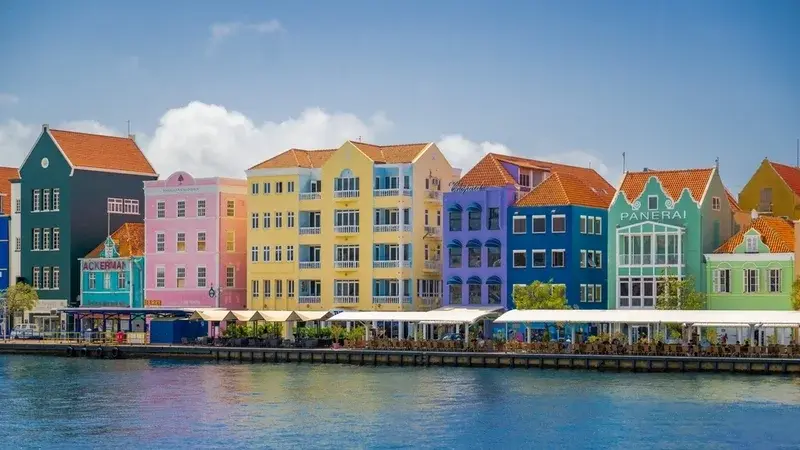
H&CO : Jun 5, 2026, 3:17:58 PM
Expanding corporate operations into the Caribbean requires a clear understanding of regional compliance, legal frameworks, and administrative steps....

H&CO : Jun 10, 2026, 12:50:15 PM
Most Common Types of Legal Structures in Honduras When incorporating a business in Honduras as a foreign investor, choosing the correct legal entity...