


 Argentina
 Brazil
 BVI
BVI Canada
 Chile
Chile Colombia
 Costa Rica
 Curaçao
 Guatemala
 Honduras
 Mexico
 Nicaragua
 Panama
 Peru
Peru Uruguay
 USA
USA Germany
 Luxembourg
 South Africa
 Spain
Spain Switzerland
 The Netherlands
 United Kingdom
 Hong Kong
 India
India New Zealand
 Singapore
 Turkey
 H&CO
H&CO
How to Open a Business in Guatemala
 H&CO : Jun 9, 2026, 12:40:54 PM
Setting up a commercial presence in Central America’s largest economy requires a clear roadmap. While Guatemala has significantly modernized its...

When incorporating a business in Honduras as a foreign investor, choosing the correct legal entity is essential for tax efficiency and liability protection. The two most widely used corporate structures are:
To initiate the incorporation process remotely or locally, foreign founders must provide specific documentation:
Setting up a corporation or limited liability company involves navigating several distinct administrative levels:
Before drafting legal documents, your legal counsel must check the availability of the proposed corporate name within the Honduran Mercantile Registry (Registro Mercantil). The name must be completely unique and include its corresponding legal suffix (e.g., S.A. or S. de R.L.).
A Honduran Notary Public must draft the Public Deed of Incorporation (Escritura Pública). This foundational document dictates the company’s corporate purpose, capital structure, governance rules, and bylaws. The local legal representative or attorney-in-fact will sign this deed before the notary.
Once executed, the Public Deed must be formally registered with the Mercantile Registry at the Chamber of Commerce and Industry (Cámara de Comercio e Industrias) corresponding to the company's domicile (e.g., Tegucigalpa or San Pedro Sula). This step grants the company its official legal personality.
With the registered deed in hand, the company must apply for its National Tax Registry Number (RTN - Registro Tributario Nacional) before the Revenue Administration Service (SAR - Servicio de Administración de Rentas). The RTN is essential for any financial, customs, or commercial transactions.
To conduct physical operations, a company must obtain an Operating Permit (Permiso de Operación) from the local municipality (Alcaldía). This process involves paying municipal taxes based on initial capital and complying with zoning, environmental, and safety regulations.
To formalize capitalization and process local business expenses, the company must set up a corporate account at a commercial bank in Honduras. Compliance mandates will require the company's registered deed, RTN, municipal permit, and official identification from the legal representative.
If the business plans to hire staff, it must register as an employer with the following entities:
| Phase | Authority | Obligation | Frequency |
| Tax Invoicing | SAR | Authorization of fiscal invoices via the Régimen de Facturación. | Upon Setup / As Needed |
| Income Tax Filing | SAR |
Filing corporate income tax returns (25% CIT base rate). |
Annually (By April 30th) |
| Sales Tax (VAT) | SAR |
Declarations and payments of collected sales tax (15% standard). |
Monthly |
| Municipal Renewal | Local Alcaldía |
Renewal of the Municipal Operating Permit and payment of activity taxes. |
Annually (By January 31st) |
Honduras levies a standard corporate income tax on profits earned within its territory, complemented by a withholding tax on dividends distributed to foreign shareholders. Unlike countries with extensive treaty networks, Honduras prevents international double taxation internally by maintaining its traditional territorial tax system, which ensures that foreign-source income remains untaxed locally. Additionally, foreign investors should strategically evaluate special promotional regimes or monitor the shifting legislative landscape regarding upcoming corporate tax incentives to maximize structural optimization when setting up operations.
Beyond its traditional commercial frameworks, Honduras actively drives economic growth through specialized investment platforms like the Free Trade Zone (ZOLI) and Export Processing Zone (ZIP) models, which cater to export-driven manufacturing, logistics, and nearshoring enterprises. The government and private chambers of commerce frequently promote operational incentives, including long-term customs duty exemptions and corporate tax waivers for qualified global firms. This evolving ecosystem strengthens Honduras' position as a highly competitive hub for cost-effective logistics, light manufacturing, and technological services in Central America.
Expanding into the Honduran market is a strategic milestone that demands a deep understanding of local administrative protocols and regulatory updates. We provide end-to-end professional support to ensure your corporate entity is registered smoothly, operates in full compliance with tax authorities, and is built on a solid foundation for sustainable growth. With extensive experience guiding multinational businesses across Latin America, we bridge the gap between local corporate requirements and your global business objectives. Whether you are establishing a new regional branch or launching a complex investment project, we are your trusted partner for doing business in Honduras.


H&CO : Jun 9, 2026, 12:40:54 PM
Setting up a commercial presence in Central America’s largest economy requires a clear roadmap. While Guatemala has significantly modernized its...
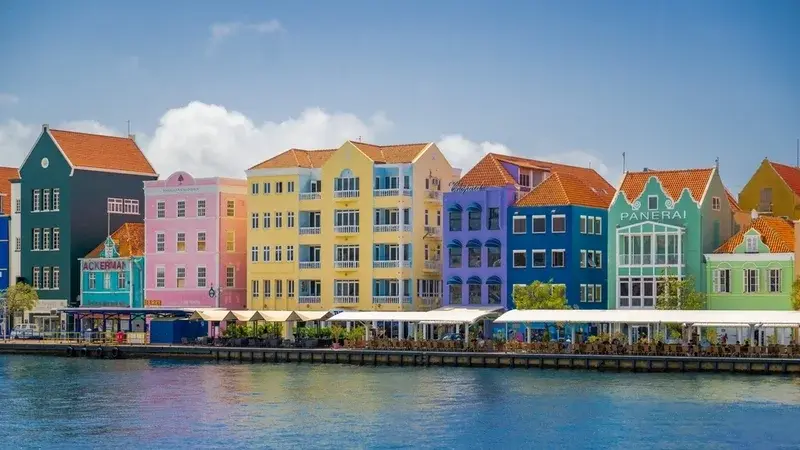
H&CO : Jun 5, 2026, 3:17:58 PM
Expanding corporate operations into the Caribbean requires a clear understanding of regional compliance, legal frameworks, and administrative steps....

H&CO : Jun 5, 2026, 3:02:04 PM
Chile's recognized for its solid legal framework, favorable tax treaties, and open-market policies make the country an ideal gateway for doing...