


 Argentina
 Brazil
 BVI
BVI Canada
 Chile
Chile Colombia
 Costa Rica
 Curaçao
 Guatemala
 Honduras
 Mexico
 Nicaragua
 Panama
 Peru
Peru Uruguay
 USA
USA Germany
 Luxembourg
 South Africa
 Spain
Spain Switzerland
 The Netherlands
 United Kingdom
 Hong Kong
 India
India New Zealand
 Singapore
 Turkey
 H&CO
H&CO
How to Open a Business in New Zealand
 H&CO : Jul 14, 2026, 6:09:03 PM
Setting up an operational base in New Zealand offers one of the fastest, most transparent incorporation pathways of any developed economy, making it...
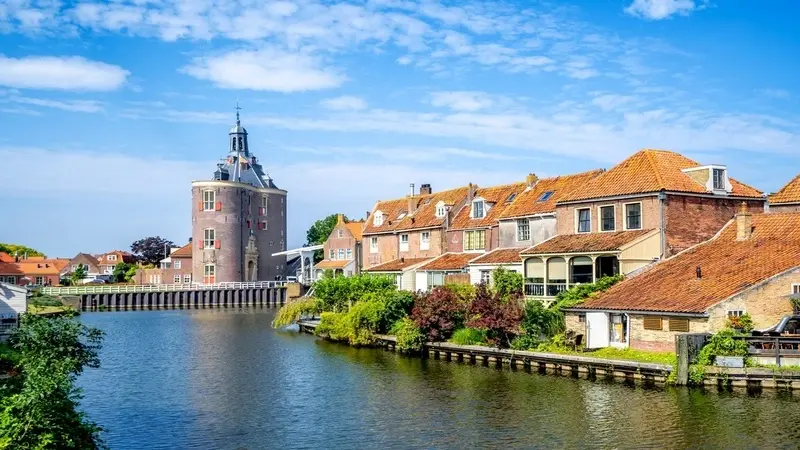
Establishing an operational base in the Netherlands represents the most efficient and sophisticated pathway to consolidating growth within the European Union's Single Market. Corporate registration is an agile and modernized process, coordinated through the Chamber of Commerce (KVK) in collaboration with the civil notary system. By permitting 100% foreign ownership and requiring a symbolic minimum share capital of just one euro cent (€0.01), this jurisdiction offers a highly accessible and transparent ecosystem for global corporations looking to mobilize capital without bureaucratic friction.
The corporate vehicle of choice for multinationals in this market is the Limited Liability Company, universally known as the Dutch BV. This legal structure not only safeguards assets with robust liability protection but also grants exceptional statutory flexibility to adapt to complex investment agreements. Furthermore, it integrates seamlessly with the robust Dutch financial infrastructure and its advantageous network of double taxation treaties, enabling parent companies to centralize intellectual property, manage European distribution, and optimize dividend flows under top-tier governance standards.
Even though the foundational framework is highly straightforward, establishing a sustainable competitive advantage demands a meticulous navigation of local regulations, such as tax registration with the Belastingdienst, compliance with the country's strict labor laws, and the correct listing in the Ultimate Beneficial Owner (UBO) register. At H&CO, we completely eliminate market entry risks by providing comprehensive, end-to-end guidance. From the legal structuring of the entity to cross-border tax alignment, our expertise ensures a flawless and fully compliant operational deployment, allowing your organization to focus exclusively on leading commercial expansion at the economic epicenter of Europe.

Selecting the correct legal entity is a foundational decision when establishing a commercial footprint in the Netherlands. The choice of corporate structure directly dictates a multinational’s local liability, corporate tax exposure, financial reporting mandates, and capacity to secure external capital. Dutch corporate law offers a highly versatile array of entities, ranging from highly flexible private structures to formal vehicles tailored for public capital markets.
The Besloten Vennootschap (BV) is the undisputed corporate vehicle of choice for foreign direct investment, international subsidiaries, and global holding company structures. It features a fully independent legal personality, meaning the financial liability of its shareholders is strictly limited to their capital contributions. Following regulatory modernization, the incorporation process is streamlined and cost-efficient, requiring no mandatory local directors and a symbolic minimum share capital of just €0.01. The BV also offers exceptional governance adaptability, allowing founders to implement distinct share classes, varying voting rights, and tailored shareholder agreements to protect corporate control.
2. Public Limited Company (NV)
The Naamloze Vennootschap (NV) is a public limited company designed primarily for large-scale enterprise operations, major financial institutions, and businesses aiming for a public listing on a stock exchange. Unlike a BV, whose registered shares are subject to transfer restrictions, NV shares are generally freely transferable on public capital markets. Incorporating an NV carries stricter regulatory oversight, mandatory audit provisions, and a formal minimum paid-up share capital requirement of €45,000. For most non-listed foreign entities entering the European market, the NV structure is usually more complex and administratively heavy than necessary.
3. General Partnership (VOF)
The Vennootschap Onder Firma (VOF) is a general partnership formed when two or more co-owners operate a commercial business under a common trade name. The VOF does not possess a separate legal personality, meaning all partners retain joint and several unlimited liability for the company’s debts and financial obligations. From a fiscal standpoint, the Dutch Tax Authorities (Belastingdienst) treat the VOF as a transparent entity, passing profits and losses directly through to the partners' individual tax returns. While simpler to set up, its unlimited liability structure makes it less suitable for high-cap international corporate deployments.
The Commanditaire Vennootschap (CV) functions as a specialized limited partnership consisting of two distinct classes of partners: at least one managing partner and one silent partner. Managing partners oversee daily operational governance and face unlimited personal liability, whereas silent (or limited) partners provide capital but are legally restricted from management activities, capping their liability strictly at their financial contribution. This structure is highly favored in international private equity, venture capital, and joint-venture corporate arrangements where passive investors seek to deploy capital cleanly into the Dutch market.
The Coöperatie is a unique and highly sophisticated corporate entity with full legal personality, historically rooted in agriculture but heavily utilized today in international tax planning and holding structures. It is a member-based organization established to execute specific economic activities for the mutual benefit of its participants. The Cooperative provides limited liability to its members and offers immense structural flexibility, as profits can frequently be distributed with minimized tax leakage depending on the legal status and active corporate nature of its international members.
Establishing a fully compliant commercial presence in the Netherlands requires meeting a structured set of statutory criteria governed by Dutch corporate law and European Union directives. The registration framework is designed to verify corporate transparency, establish fiscal accountability, and officially secure the entity's distinct legal personality. To achieve a seamless market entry, multinational enterprises must fulfill several core administrative and legal prerequisites before launching active operations.
Selection and Verification of a Unique Trade Name
Prior to any formal filing, businesses must select an original trade name that complies strictly with the Dutch Trade Name Act (Handelsnaamwet). The proposed name must be entirely unique, must not infringe upon existing trademarks registered within the Benelux Office for Intellectual Property (BOIP), and must accurately reflect the company's intended commercial activities without misleading consumers or public authorities.
Substance and Registered Office Mandate
To obtain official registry, every corporate entity must maintain a physical, verifiable commercial address within the Netherlands to serve as its official headquarters. This visiting address (zakenadres) cannot be a standard P.O. Box and must be backed by a legally executed commercial lease agreement, a property deed, or an official written declaration of consent from a registered local corporate service provider.
Execution of the Notarial Deed of Incorporation
For corporate structures with full legal personality, such as a Dutch BV or NV, the incorporation process must be facilitated by an authorized Dutch civil-law notary (notaris). The notary is legally responsible for drafting and executing the definitive Deed of Incorporation, which embeds the company's official Articles of Association (statuten), outlines the internal governance rules, defines the initial share capital allocation, and formally documents the appointment of the founding directors.
Formal Commercial Registration with the KVK
Once the notarial deed is finalized, the entity must be officially entered into the Dutch Business Register (Handelsregister) managed by the Netherlands Chamber of Commerce (Kamer van Koophandel - KVK). This step grants the business its unique 8-digit KVK identification number, makes its corporate structure public record, and triggers the issuance of the Rechtspersonen en Samenwerkingsverbanden Informatienummer (RSIN), which acts as the foundational legal entity identifier.
Mandatory Ultimate Beneficial Owner (UBO) Filing
In strict alignment with European anti-money laundering (AML) regulations, expanding companies are legally mandated to register their Ultimate Beneficial Owners (UBOs) with the KVK UBO register. A UBO is defined as any natural person who directly or indirectly holds more than 25% of the company’s shares, voting rights, or dynamic ownership interest, and compliance must be completed simultaneously with or immediately following the primary corporate registration.
Tax Profile Activation with the Belastingdienst
Upon successful KVK entry, the company's data is automatically transmitted to the Dutch Tax and Customs Administration (Belastingdienst). The authority evaluates the corporate profile to activate essential tax tracks, issuing the corporate income tax (CIT) number, the payroll tax identifier (if employing staff), and the VAT identification numbers (BTW-id and BTW-nummer), which are absolute prerequisites for executing transactions and opening a local commercial bank account.
1. Finalize Corporate Structure and Trade Name:
Select a unique company name that complies with the Dutch Trade Name Act and verify its availability through the Chamber of Commerce (KVK) and the Benelux Office for Intellectual Property (BOIP). During this phase, you must also define the initial corporate structure, including the distribution of shares, voting rights, and the symbolic share capital (which can be as low as €0.01 for a Dutch BV).
2. Draft the Articles of Association:
Partner with an authorized Dutch civil-law notary (notaris) to draft the company's foundational Articles of Association (statuten). This document must clearly outline the corporate purpose, governance rules, appointment of directors, and provisions for transferring shares. You must also submit the required Know Your Customer (KYC) documentation for all founding shareholders and directors.
3. Execute the Deed of Incorporation:
The civil-law notary formally executes the definitive Deed of Incorporation. This step can be completed remotely via a legalized Power of Attorney (POA), meaning foreign directors and shareholders do not need to travel to the Netherlands to sign the document physically.
4. Register with the Chamber of Commerce (KVK):
Immediately following execution, the notary submits the company's file to the Dutch Business Register. The KVK will officially issue your unique 8-digit company identification number and an extract proving the legal existence of the new entity. This step also triggers the generation of your RSIN (Rechtspersonen en Samenwerkingsverbanden Informatienummer), which serves as your overarching legal entity identifier.
5. File the Ultimate Beneficial Owner (UBO) Registry:
In compliance with European anti-money laundering directives, you must register all Ultimate Beneficial Owners (UBOs) in the KVK UBO register. A UBO is defined as any natural person who directly or indirectly owns or controls a percentage greater than 25% of the company's shares or voting rights.
6. Activate Tax Profiles and Open Bank Accounts:
The KVK automatically forwards your corporate details to the Dutch Tax and Customs Administration (Belastingdienst). The tax authority will activate your necessary tax tracks, including Corporate Income Tax (CIT) and Value Added Tax (VAT/BTW). With your KVK extract and tax details active, you can open a local SEPA corporate bank account to capitalize the company and begin commercial operations.
Corporate Governance Note: While a Dutch BV does not legally require local Dutch directors or residents on its board to achieve incorporation, having local management or economic substance is highly recommended to satisfy international tax treaty requirements and secure local banking services efficiently.
Obtaining your initial deed of incorporation is merely the first milestone. To guarantee uninterrupted, long-term commercial activities within the Netherlands, international enterprises must meticulously align with a European regulatory framework that values continuous transparency and heavily penalizes corporate non-disclosure.
Annual Financial Reporting and Ownership Transparency (KVK): Rather than dealing with basic administrative renewals, Dutch companies must actively manage their standing with the Chamber of Commerce (KVK) through the mandatory digital filing of annual financial statements (jaarrekening). Regulatory oversight here is unyielding: the authorities strictly monitor the national Ultimate Beneficial Owner (UBO) registry, requiring up-to-date documentation for any individual holding a stake or voting rights greater than 25%. Delaying the publication of these annual accounts or failing to disclose UBO updates is legally classified as an economic offense, which can trigger severe corporate fines, executive liability, and immediate operational freezes.
Establishing a presence in a premium European jurisdiction governed by intricate EU frameworks and advanced tax mechanisms demands specialized, localized expertise. H&CO acts as your dedicated expansion partner, simplifying complex bureaucratic procedures to convert regulatory compliance into a powerful engine for your global growth. Our professionals manage the entire lifecycle of your corporate setup—from handling identity verification with civil-law notaries and engineering customized Articles of Association (statuten), to registering your entity for VAT with the Belastingdienst and optimizing your international capital flows.
Whether your commercial objectives align with the operational agility of a Dutch BV or the centralized oversight of a local branch office, our advisors deliver a fully aligned, risk-mitigated market entry. Contact the H&CO team today to secure a robust operational foundation and dedicate your resources entirely to capturing high-yield opportunities across Europe.

H&CO : Jul 14, 2026, 6:09:03 PM
Setting up an operational base in New Zealand offers one of the fastest, most transparent incorporation pathways of any developed economy, making it...

2 min read
H&CO : Jun 19, 2026, 3:05:42 PM
Common Types of Legal Structures in Germany When expanding your business into Europe’s largest market, selecting the right corporate structure is a...

H&CO : Jun 19, 2026, 2:44:32 PM
Establishing a resilient corporate presence within the European market requires a sophisticated understanding of cross-border compliance, EU...