


 Argentina
 Brazil
 BVI
BVI Canada
 Chile
Chile Colombia
 Costa Rica
 Curaçao
 Guatemala
 Honduras
 Mexico
 Nicaragua
 Panama
 Peru
Peru Uruguay
 USA
USA Germany
 Luxembourg
 South Africa
 Spain
Spain Switzerland
 The Netherlands
 United Kingdom
 Hong Kong
 India
India New Zealand
 Singapore
 Turkey
 H&CO
H&CO
1 min read
Doing Business in New Zealand
 H&CO : Jul 14, 2026, 5:28:39 PM
New Zealand has built a reputation as one of the easiest and most trustworthy places on earth to launch a company, and that reputation is backed by...
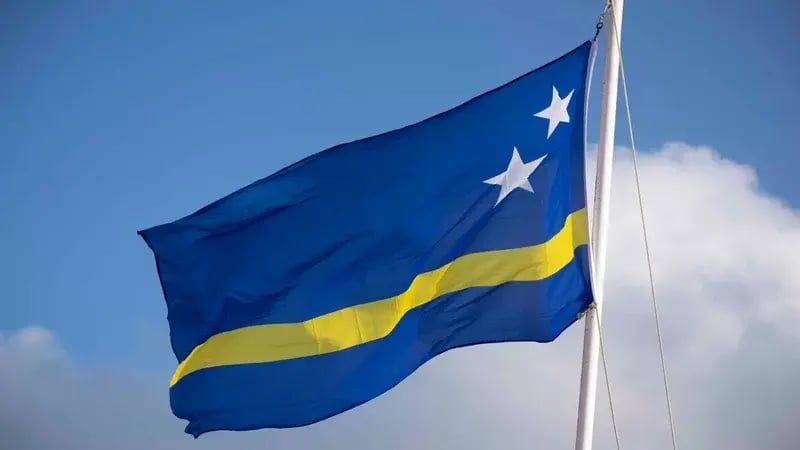
Curaçao stands out in the Caribbean as one of the most stable and strategically located hubs for international business and foreign investment. As a constituent country of the Kingdom of the Netherlands, it offers unparalleled legal certainty, robust infrastructure, and strong institutional stability. Thanks to its strategic position outside the hurricane belt, deep-water ports, and a highly multilingual workforce, Curaçao remains a competitive gateway connecting Europe, Latin America, and North American markets.
At H&CO, we understand the complexities of expanding into new jurisdictions. The private sector drives a significant portion of Curaçao's economic activity, supported by transparent regulations and innovative tax frameworks designed to attract global enterprise. Whether you are looking to set up an e-gaming platform, a maritime logistics operation, or an international financial entity, we provide the localized expertise necessary to ensure compliance and maximize growth.

Curaçao offers a wide range of investment opportunities supported by structural economic modernization and its unique positioning within the Kingdom of the Netherlands. While often considered a niche market, its specialized ecosystems make it highly attractive for long-term international projects.
For companies managing cross-border taxation and seeking to optimize international corporate structures, we provide practical insight into the island’s participation exemptions and compliance protocols. By leveraging advanced regional integrations, businesses can establish highly competitive multi-channel hubs in the Caribbean.
Curaçao boasts one of the finest natural deep-water harbors in the region. The Curaçao Maritime Economic Zone (CMEZ) and the island’s free zones (E-zones) offer exceptional tax exemptions, duty-free imports/exports, and streamlined customs procedures. These facilities position the island as a key distribution and transshipment hub for goods flowing across the Atlantic and throughout the Americas.
For decades, Curaçao has been a leading jurisdiction for international financial services, trust management, and investment funds. Additionally, it remains a premier global hub for the e-gaming industry. Licensed operators benefit from the island's competitive territorial tax rules; if players and servers are situated internationally, the local corporate tax burden is minimized, as the revenue is classified as foreign-sourced.
The tourism sector is a vital pillar of the economy, showing consistent growth in both stay-over arrivals and luxury hospitality developments. The government actively encourages foreign investment in hotel construction, eco-resorts, and land development through dedicated fiscal incentives, including temporary exemptions from real estate taxes and import duties on construction materials.
Population: Approximately 150,000 inhabitants with a highly urbanized population concentrated around the capital.
Official Languages: Papiamento, Dutch, and English. Spanish is also widely spoken across all business sectors.
Currency: Netherlands Antillean Guilder (ANG), which is strictly pegged to the US Dollar (USD) at a stable rate of 1.79.
Political System: It is a constituent country of the Kingdom of the Netherlands, operating as a unitary parliamentary representative democracy under a constitutional monarchy. The local government manages internal affairs, while the Kingdom oversees foreign relations and defense, ensuring a secure and globally aligned political environment.
Economic System: Curaçao operates an open, market-driven economy heavily focused on services, international trade, shipping, logistics, tourism, and financial services. It maintains high standards of compliance with international regulatory bodies.
Doing business in Curaçao offers solid opportunities for international investors thanks to its stable macroeconomic framework, strong legal institutions, and transparent market practices. While new foreign entrants must navigate specific regulatory procedures and government documentation—especially when securing operating permits or establishing local economic substance—these processes are predictable and increasingly digitized.
Our team at H&CO emphasizes that local partnerships and trust are highly valued in the Curaçao business community. Entrepreneurs and institutional leaders prefer building long-term professional relationships, which are facilitated by the island's unique cultural blend of European professionalism and Caribbean warmth.
The country offers a transparent and investor-friendly legal environment, supported by a strict protection of property rights and modern commercial legislation. Commercial activities are regulated by the Curaçao Commercial Code, which is closely aligned with Dutch corporate law. The legal framework guarantees absolute equality of treatment between foreign and local investors, ensuring that international entities enjoy the same rights, protections, and access to corporate mechanisms as domestic businesses.
Curaçao’s corporate tax framework seeks to balance robust international compliance with competitive investment incentives. It features a unique territorial tax system, meaning that only profits derived from domestic activities are subject to local profit tax. The following table summarizes the main aspects of corporate taxation relevant to foreign and domestic companies operating in the jurisdiction.
|
TAX ASPECT |
DESCRIPTION/RATE |
|
Standard Corporate Profit Tax |
Brackets introduced recently: 15% on domestic profits up to ANG 500,000, and a flat 22% on domestic profits exceeding that threshold. |
|
Territorial Tax Exemption |
0% tax on foreign-source income. Profits attributed to international operations are fully exempt from profit tax, provided proper local substance is maintained. |
|
Preferential Service Regime |
A reduced 3% profit tax rate applies to qualifying domestic support and international service activities, provided there is a real local presence. |
|
Curaçao Investment Company (CIC) |
Special regime offering a 0% profit tax rate for companies primarily engaged in qualifying investment and holding activities. |
|
Withholding Taxes |
Generally 0% withholding tax on dividends, interest, and royalties paid to non-resident shareholders, subject to meeting local substance requirements. |
|
Sales Tax (Omzetbelasting - OB) |
Standard tax rate of 6% on the sale of goods and services; 7% for hotel accommodations and insurance; 9% for luxury goods and tobacco. |
|
Submission Deadlines |
Monthly filings are mandatory for Sales Tax (OB), while annual corporate profit tax returns must be filed in accordance with statutory timelines. |
The main investment incentives promoted by the government and the Curaçao Investment and Export Promotion Agency (CINEX) include:
 |
Curaçao offers attractive market niches in digital infrastructure, renewable energy projects, and specialized maritime services. While the economy has historically relied on traditional shipping and refining, it has progressively diversified into high-tech services, green energy initiatives, and international e-commerce. Importantly, companies should align their corporate governance to reflect the rigorous compliance and substance requirements enforced on the island. Curaçao is an OECD-compliant jurisdiction that actively adheres to international standards against harmful tax practices. Public data and guidance from CINEX indicate that the integration of international capital with local specialized infrastructure is the driving force behind the country's modern service sector expansion.
|
Curaçao Business Culture
Curaçao’s business culture emphasizes professional courtesy, directness, and mutual trust. Initial meetings are typically structured to establish clear common ground, blending traditional Dutch administrative efficiency with a welcoming Caribbean corporate etiquette.
Curaçao companies generally maintain clear organizational hierarchies. Respect for executive leadership, experience, and academic or professional titles is standard practice. Senior executives typically direct negotiations, and decision-making processes are thorough, relying heavily on a clear consensus among senior partners.
Business professionals on the island are highly articulate and frequently shift seamlessly between English, Spanish, Dutch, and Papiamento. Communication is professional, polite, and objective, though business partners highly value transparency and the preservation of professional reputation. Arriving precisely on time for appointments is viewed as a hallmark of reliability and respect.
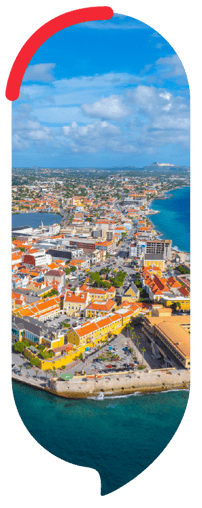
Willemstad, a designated UNESCO World Heritage site, serves as the economic and administrative center of the island. It features distinct quarters that are ideal for business activities:
Pietermaai District
Often regarded as the cultural and entrepreneurial heart of Willemstad, Pietermaai has transformed into a vibrant business hub. It features restored historic mansions that house boutique hotels, corporate offices, trendy cafes, and top-rated restaurants. It is highly walkable and provides a dynamic, SoHo-like environment that is perfect for networking and hosting international clients.
Punda and Otrobanda
Connected by the iconic Queen Emma Floating Bridge, these two historic districts form the core commercial zone. Punda is known for its historic architecture and retail concentration, while Otrobanda hosts the historic Rif Fort complex, modern corporate offices, and outdoor eateries overlooking the Caribbean Sea.
Piscadera
Located just a short drive from the city center, Piscadera is an affluent area characterized by luxury business hotels, executive apartments, and large conference centers. It offers peace, high-end amenities, and excellent facilities for large-scale international corporate events.
For professional corporate meetings, venues such as The Pen Restaurant & Terrace (located at the historic Avila Beach Hotel in Pietermaai) offer an ideal oceanside atmosphere, exceptional cuisine, and quiet settings for confidential business discussions.
1 min read
H&CO : Jul 14, 2026, 5:28:39 PM
New Zealand has built a reputation as one of the easiest and most trustworthy places on earth to launch a company, and that reputation is backed by...
H&CO : Jun 10, 2026, 4:25:16 PM
Are you looking to expand your business operations into Central America? As a highly competitive and emerging market in the region, Nicaragua offers...
1 min read
H&CO : Jul 27, 2026, 5:37:09 PM
Turkey stands as an indispensable strategic gateway, physically and economically bridging Europe, Asia, and the Middle East to offer foreign...